
Be Strong. Open Up. Don’t Be Too Much.The Mixed Messages Men Carry About Masculinity and Mental Health
Men are told to be strong, open up, provide, stay present, ask for help, and never become too much. Therapy can help men sort through these mixed messages and build a version of masculinity with more choice, honesty, and range.

A man in my office once said, “I know I’m supposed to talk about my feelings. I just feel like I’m doing it wrong.”
He was not against therapy. He knew words like attachment, triggers, and emotional availability. He wanted to be a good husband and father. He wanted to communicate better.
But he also felt trapped.
If he spoke while he was upset, he worried he would come across as angry or unsafe. If he waited until he had settled down, his wife experienced him as shut down. If he tried to solve the problem, he was told he was not listening. If he admitted that he needed reassurance, he felt weak and ashamed.
Finally, he asked, “What am I actually supposed to be?”
It is a question I hear in different forms from a lot of men.
The Rules Changed, but the Old Rules Never Left
Many men grew up with a clear, if limited, picture of masculinity: work hard, provide, protect, stay calm, and handle your own problems. Do not complain. Do not cry. Do not let anyone see you lose control.
Reliability, courage, responsibility, and steadiness matter. But when those qualities become rigid rules, a man can disappear inside them.
Today, men also hear a newer set of expectations. Be vulnerable. Talk about your feelings. Be emotionally present. Ask for help. Make room for other people’s experiences. Do not use anger to avoid what hurts.
Those are healthy invitations. The trouble is that the old rules did not simply vanish when the new ones arrived.
A man may be told to open up, yet feel people pull away when his feelings are messy. He may be encouraged to ask for help, while believing he is valued most when he is useful. He may be expected to provide like earlier generations and parent with an emotional presence those generations were rarely taught.
The messages often sound like this:
Be confident, but never controlling.
Be strong, but also vulnerable.
Be a provider, but do not let work take you away from your family.
Share your feelings, but do not make anyone responsible for them.
Take initiative, but know when to step back.
Ask for help, but remain dependable.
Each can make sense. Trying to meet all of them without knowing how they fit together can leave a man tense, ashamed, and unsure of himself.
Men’s Distress Does Not Always Look Like Sadness
The National Institute of Mental Health notes that mental health struggles in men can show up as anger, irritability, sleep problems, substance use, risk-taking, physical complaints, or feeling emotionally flat. Men are also less likely than women to have received treatment. The CDC reports that in 2024, the suicide rate among males was nearly four times the rate among females.
This matters because a man may not say, “I’m depressed.”
He may say, “Everybody needs something from me.”
He may work longer hours, drink more, scroll late into the night, lose interest in sex, become short with his children, or stop returning friends’ messages. He may call it stress because stress feels practical. Stress sounds like something a competent person can manage.
Underneath it may be fear, grief, loneliness, shame, or a growing sense that his life no longer fits.
My clients know I am always asking, “Where do you feel that in your body?” The answer may be pressure in the chest, heat in the face, a clenched jaw, or a heavy feeling behind the eyes.
The body often knows there is a problem before the story is ready to admit it.
Masculinity Is Not the Diagnosis
Some conversations treat masculinity itself as something men need to overcome. That creates another trap. A man who already feels uncertain may hear that even his wish to be strong, capable, protective, or respected is suspect.
An online world is ready to answer that shame with another rigid script: dominate, never apologize, need no one, and treat every relationship as a contest for power.
Both messages flatten men.
The healthier question is not, “Is masculinity good or bad?” It is, “Does the way I learned to be a man give me choices?”
Strength can mean taking action. It can also mean staying in a hard conversation without becoming cruel or disappearing. Protection can mean defending someone from danger. It can also mean creating enough safety for your child to tell you the truth. Responsibility can mean paying the bills. It can also mean admitting when your anger is hurting the people you love.
The goal is not to make men less masculine. It is to make masculinity roomy enough for a full human life.
From Performance to Choice
In therapy, we can begin by slowing the pattern down.
What is the story you are telling yourself? Maybe it is, “If I need help, I have failed.”
What feeling is under that story? Fear? Shame? Sadness?
Where does it live in your body?
What do you usually do next? Get loud? Fix? Joke? Work? Withdraw?
And then comes the important question: What choice do you want to make now?
That choice may be saying, “I am getting defensive, but I do not want to leave this conversation.” It may be calling a friend before the crisis, setting a boundary instead of building resentment, or making a therapy appointment before your relationship, health, or work forces the issue.
This is not weakness. It is a different kind of self-command—the ability to notice what is happening inside you without automatically obeying it.
A Better Question About Being a Man
Maybe the question is not, “Am I doing masculinity correctly?”
Maybe it is:
Which parts of being a man feel true to me?
Which parts are performances I learned to survive?
Where am I dependable for everyone except myself?
What emotion do I turn into anger, distance, or work?
What would strength look like if it included honesty?
Men do not need one more impossible standard. They need room to examine the standards they inherited and decide what they want to carry forward.
In my work with men in Kansas City, therapy is not about taking away toughness, independence, humor, ambition, or strength. It is about adding range. A man can be steady and need support. He can be accountable without living in shame. He can care for other people without abandoning himself.
He can stop performing manhood long enough to become more fully himself.
You do not have to heal yourself alone.
It’s Not Just Talking: How Conversation Becomes Therapeutic
Therapy is sometimes dismissed as “just talking.” But an attuned conversation can help us connect past and present, notice what the body is carrying, and see patterns that are almost impossible to recognize alone. You do not have to heal yourself alone.

The clinical moment below is a composite. Details have been changed to protect privacy.
“That’s what I’ve been doing with my daughter this whole time.”
The sentence seemed to surprise him.
He had been talking about his fears for his daughter—her choices, her future, and what might happen if she made the wrong move. As we connected the present to his own past, something came into focus. The fear did not begin with her. It had lived inside him for years.
He had been trying to protect his daughter from an old fear by placing it over her life.
I didn’t hand him that realization. I helped connect the past and the present, and then stayed with him long enough for him to hear himself.
That is one reason conversation becomes therapeutic.
The body often recognizes something first
There are moments in therapy when someone says a sentence and their body responds before they fully understand what they have discovered. They may laugh and not know why. They may suddenly feel hot. Sometimes a quizzical smile appears, as if one part of them has recognized the truth while the rest is still catching up.
My clients know that I am always asking, “Where do you feel that in your body?” I ask partly as a way of de-compartmentalizing. A person can tell a clear, organized story from the neck up while their chest tightens, their stomach drops, or their hands curl into fists beneath the story.
Thoughts, feelings, memories, and physical reactions do not live in separate rooms, even when we have learned to treat them that way.
Asking about the body brings those rooms back together.
The unexpected laugh does not necessarily mean something is funny. The heat does not mean the conversation has gone wrong. These reactions may be telling us that a familiar story is being experienced differently. Something that had been carried privately is now being spoken in the presence of another person.
The person is no longer alone inside it.
Another person can hear what you cannot
When we are living inside a pattern, we rarely experience it as a pattern. It simply feels like reality.
We know our own history too well. We carry every old explanation, fear, loyalty, and reason we had to adapt. All of that can make it almost impossible to see what we are repeating. We may think we are responding only to what is happening today when the past is also sitting in the room.
Another person listens from a different position. A therapist can hear the words that keep returning, notice where the story speeds up, and wonder why one moment carries so much weight. Therapy creates room to ask:
Is this feeling only about what is happening now?
When have you felt this before?
What are you trying to prevent?
Who are you afraid you—or someone you love—might become?
The therapist’s job is not to announce the answer. It is to hold the thread long enough for the person to recognize where it leads.
Sometimes pop culture is the side door
Rapport building around pop culture is not filler while we wait for the “real therapy” to begin. Sometimes it is the therapeutic gateway.
A person may be able to talk about why Jack on LOST has to fix everyone before they can name what it costs them to always be the fixer. They may laugh about Michael Scott’s desperate need to be liked on The Office before talking about their own fear of rejection. They may debate whether Ross and Rachel were on a break, only to find themselves talking about assumptions, loyalty, and the unwritten rules in their own relationships.
Pop culture gives us a little distance. We can look at someone else’s story before the spotlight turns back toward our own.
Sometimes the weird thing is the doorway to the real thing.
The shared reference also tells the person something important: You do not have to translate your entire inner world into clinical language to be understood here. We can begin with the show you rewatch, the song that still gets to you, or the character you defend more strongly than you expected.
Then we get curious about why.
Attunement helps us stay
Perspective is only part of what another person provides. The other part is attunement.
Attunement means someone is paying attention not only to the facts of your story, but also to what is happening inside you as you tell it. They notice when you speed up, go blank, make a joke, change the subject, or begin to disappear from the room emotionally. They remain interested without becoming alarmed or turning away.
That steady presence helps co-regulate the nervous system. The anxiety may not vanish, but it can become manageable enough to stay curious. Instead of immediately escaping, shutting down, or pushing the feeling away, you have a different experience: discussing something painful while remaining connected to a calm and responsive person.
Talking does not erase trauma. But talking about it in an attuned relationship changes the conditions under which it is experienced. The old alarm goes off, but this time you are not alone. You can notice the urge to flee without immediately obeying it. You can feel the heat, hear the nervous laugh, and stay for the next sentence.
You cannot run away—at least not quite as easily.
This is one of the quiet ways therapy interrupts avoidance.
Different struggles, a similar process
Someone may begin therapy looking for treatment for anxiety or depression. Someone else may be struggling with relationship patterns, midlife identity issues, or the restless fear of missing out we now call FOMO.
Anxiety often tells us that something terrible will happen if we stop scanning, planning, or controlling. Depression can shrink the future until change feels pointless. Midlife identity issues can make us wonder whether we chose our life or simply became very good at performing a role. FOMO may be less about missing tonight’s event and more about grief for the unlived lives we can still imagine.
These are different struggles. But the therapeutic process often shares a shape: an experience that has remained private becomes speakable. The body joins the conversation. Another person helps connect past and present. What felt like reality begins to look like a pattern.
Once we can see the pattern, we are less likely to act it out without knowing it.
Can you heal yourself?
“Heal yourself” is everywhere right now. I understand why the phrase appeals to people. It offers hope and agency. It says that your life is not permanently controlled by what happened to you.
But it can also sound like another demand: Fix yourself privately. Do recovery correctly. Stop needing anyone.
That misses something important. Many of the fears we carry were formed in relationships, strengthened in relationships, or kept alive by what could not be said in relationships. It makes sense that some healing also happens in a relationship.
You do not have to heal yourself alone.
The goal of therapy is not to need a therapist forever. The goal is to have repeated experiences of noticing what is happening, staying present, making meaning, and choosing instead of automatically reacting. What first requires the steady presence of another person can gradually become something you are better able to do for yourself.
Before a difficult conversation, fear predicts catastrophe: If I say this out loud, I will lose control. I will fall apart. I will be judged. I will discover something I cannot handle.
Then you begin talking. We move through the anxiety instead of waiting for it to disappear first. The fear subsides. You remain intact. Often, you understand yourself more clearly than you did before.
That experience produces confidence: Maybe I can stay with this. Maybe I can recognize the pattern sooner next time. Maybe I can do more of this for myself.
Conversation is not the warm-up
People sometimes describe therapy as “just talking,” as if the conversation is what happens before the real intervention begins.
But the conversation can be the intervention.
It gives private experience language. It brings the body back into the story. It places an old fear inside a new relationship. It uses a father’s worry, a joke, a nervous laugh, or even a conversation about LOST as a way into something that has been difficult to approach directly.
Sometimes change begins with a dramatic realization. More often, it begins quietly: a flush of heat, a puzzled smile, or a sentence you did not know you were ready to say.
Then you hear yourself.
The present is not where the story started. But it is the only place where a different choice can be made.
Perhaps healing begins less with “Here is who I should become” and more with a simpler declaration:
I am HERE AS I AM NOW.
From here, I can see the pattern.
From here, I can change what comes next.
Find the pattern. Change what comes next.
Ready to start a conversation? Learn more about working with me.
When the Easygoing One Starts Speaking Up
What happens when being “the easygoing one” stops feeling like a strength and starts feeling like a job? A personal reflection on family roles, people-pleasing, anger, grief, and finding a more honest identity in the second half of life.
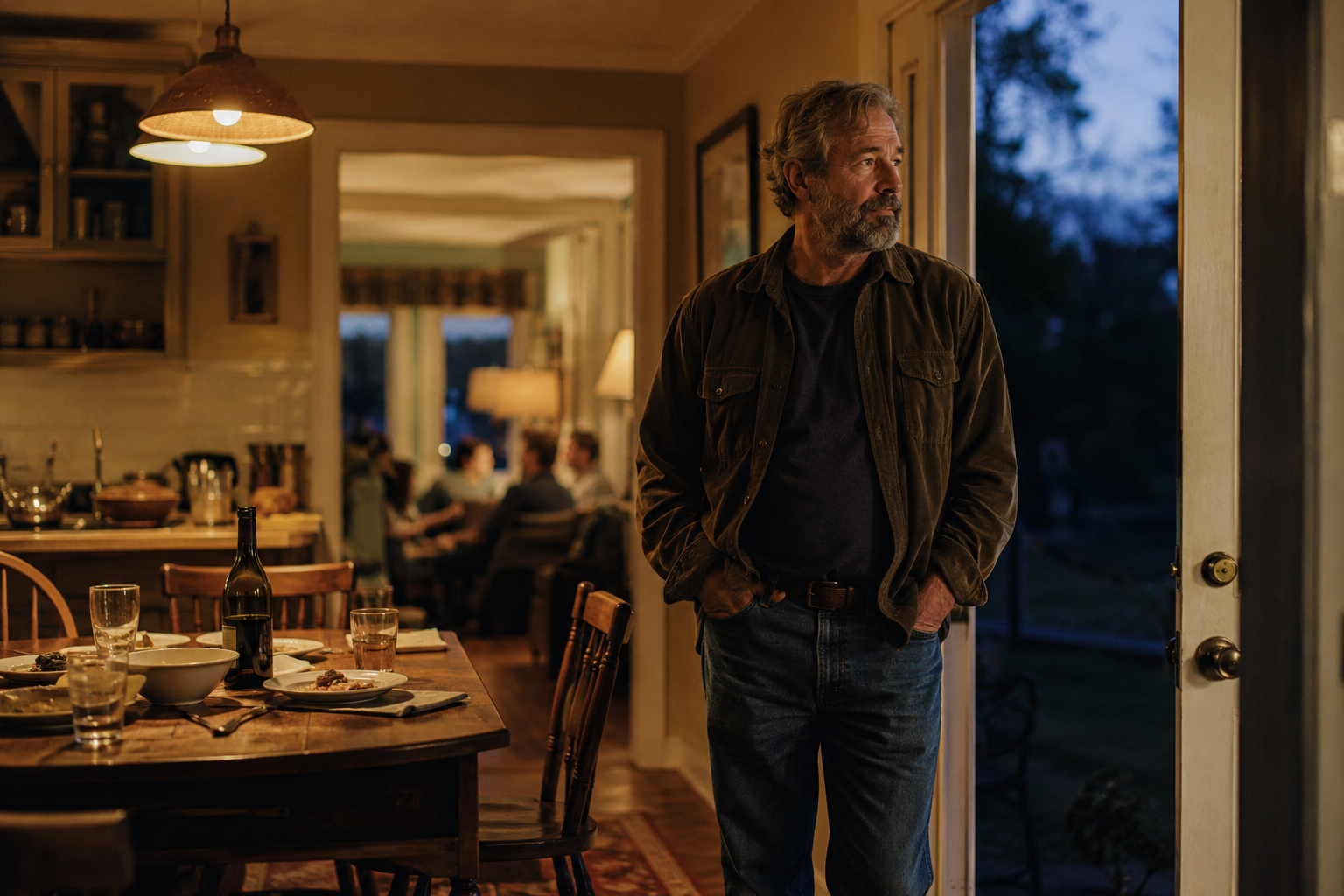
Sometimes finding yourself begins after you stop managing the room.
Finding yourself in the second half of life may begin with questioning the role that once kept you safe.
For most of my life, I would have described myself as easygoing. I could see everyone’s side. I could make people laugh. If tension entered a room, I usually knew how to lower the temperature. These are real parts of me, and I still value them. But somewhere along the way, being easygoing became more than a personality trait. It became an assignment: keep things smooth, keep everyone connected, and do not be the reason anyone gets upset.
The assignment worked. Acquiescing earned me approval and a kind of connection that felt safe. If I could understand everybody, make the right joke, or soften the disagreement, maybe no one would pull away. I could also avoid some feelings I did not know what to do with—especially sadness and fear. The room would settle down, and I could tell myself everything was fine.
That arrangement becomes harder to maintain as a family changes. My children are very young adults now. They have their own opinions, loyalties, frustrations, and relationships with each other. The disagreements are no longer the kind a parent can settle by finding a compromise or changing the subject. I began to notice how stressful—and how anger-inducing—it was to keep trying to take everyone’s side. The role that had once helped me feel connected was affecting the kind of dad and husband I wanted to be.
The anger surprised me. I had spent years trying to prevent it, both in myself and in other people. But anger often appears when something important has been repeatedly overridden. In my case, I was not only carrying everyone else’s position. I was abandoning my own before I had even figured out what it was.
When a personality trait is also a survival strategy
Some of what we call our personality began as adaptation. A child notices what creates closeness and what threatens it. One becomes responsible, another becomes invisible, another achieves, and another learns to be funny and agreeable. These roles are not fake. They often grow around genuine strengths. The problem comes when a strength becomes compulsory.
The easygoing person may be empathetic, flexible, and good at seeing complexity. But if easygoing means I cannot tolerate your disappointment in me, then flexibility has become fear. If humor always arrives before sadness can be felt, the joke may be doing more than making people laugh. If understanding everyone’s side requires having no side of your own, connection begins to depend on your disappearance.
This pattern can be understood through a simple sequence: Story → Feeling → Body → Choice. The story might be, If someone is unhappy with me, the relationship is in danger. Underneath it may be fear or sadness. The body becomes vigilant—tight, restless, ready to scan the room. Then comes the familiar choice: agree, explain, joke, smooth it over, or take responsibility for everyone’s emotional weather.
The sequence happens quickly because it has been practiced for years. Rediscovering yourself requires slowing it down long enough to notice that another choice exists.
Approval is not the same as intimacy
Approval can feel like connection, especially when disapproval once felt dangerous. But approval is often conditional: people approve of the version of us that makes things easier for them. Intimacy asks for more. It asks whether I can remain present while you know what I actually think, want, dislike, or cannot do.
This is part of why speaking up can initially feel less confident rather than more confident. The old role had a script. You knew how to play it and what response it usually produced. The newer version of you may feel awkward, uncertain, and overly serious. You may wonder whether people will accept you, whether the relationship will change, or whether this new way of being can protect you as well as the old one did.
Those fears are not proof that you are making a mistake. They are evidence that the old role was doing important work. It helped you belong. Letting it loosen means grieving the safety you believed it guaranteed.
Rediscovery includes grief
We often describe midlife change with upbeat words such as reinvention. The word can make the whole thing sound like a rebranding project: choose a new identity, announce it, and move forward. Real change is usually less tidy.
There may be grief for the years spent adjusting yourself around other people. There may be sadness about relationships that worked partly because you did not ask much of them. You may have to surrender the hope that if you remain agreeable enough, everyone will eventually feel okay and give you permission to relax. You may also grieve the version of yourself who worked very hard to keep you connected. That person deserves compassion, not contempt.
Finding yourself in the second half of life does not require rejecting everything that came before. I do not want to lose my humor, empathy, or ability to see more than one side. I want those qualities to become choices rather than duties. I want to be able to understand someone without immediately agreeing with them. I want to stay connected without making myself responsible for the absence of conflict.
As I have begun to loosen that responsibility, parts of life have started returning. I am socializing more. I feel less anxious about my work. I feel more present in my relationship with my wife. None of this has arrived through one dramatic act of self-assertion. It has come through smaller moments in which I notice the old assignment and decide that I do not have to accept it automatically.
Confidence, I am learning, is not the certainty that everyone will approve of the person I am becoming. It is the growing belief that I can survive when they do not.
The present is where identity changes
At 56, “it isn’t too late” does not mean that time is unlimited or that every lost opportunity can be recovered. Some doors close. Some choices have consequences. That reality is part of the grief.
It means that the present is all we have. It is all we have ever had. The past reaches us as memory, and the future arrives as anticipation, but every opportunity to live differently occurs now. The change may be as small as allowing an uncomfortable pause instead of making the joke. It may be telling someone, “I understand why you feel that way, but I see it differently.” It may be asking yourself what you want before calculating what will keep everyone else happy.
If you are wondering who you are now, these questions may help:
What role helped me earn approval or stay connected?
Which feelings did that role help me avoid?
Where is the role now producing anxiety, anger, or resentment?
Which relationship am I afraid will change if I become more direct?
What is one honest sentence I keep editing out of the conversation?
You do not have to blow up your life to rediscover yourself. You do have to become more willing to participate in it. The easygoing part of you does not need to disappear. It simply cannot be the only part allowed in the room.
Relationships may change when you stop organizing yourself around everyone else’s comfort. That possibility deserves to be taken seriously. But staying hidden changes relationships too—slowly, through anxiety, distance, and anger that seems to come from nowhere.
The second half of life can begin with a modest but difficult decision: I can care about how you feel without abandoning how I feel. The new voice may sound uncertain at first. It still counts. The present is where we practice using it.
If you recognize yourself in this pattern, therapy can help you understand what the role protected and practice speaking more directly without losing your compassion. I work with men and couples in Kansas City who want to find the pattern and change what comes next. Click here to set up a free consultation.
The 30 Seconds Before You Shut Down
Many men don’t struggle because they lack emotions. They struggle to catch what happens in the few seconds before anger, shutdown, or defensiveness takes over. This article looks at what vulnerability can actually look like—and how therapy can help slow the pattern down.
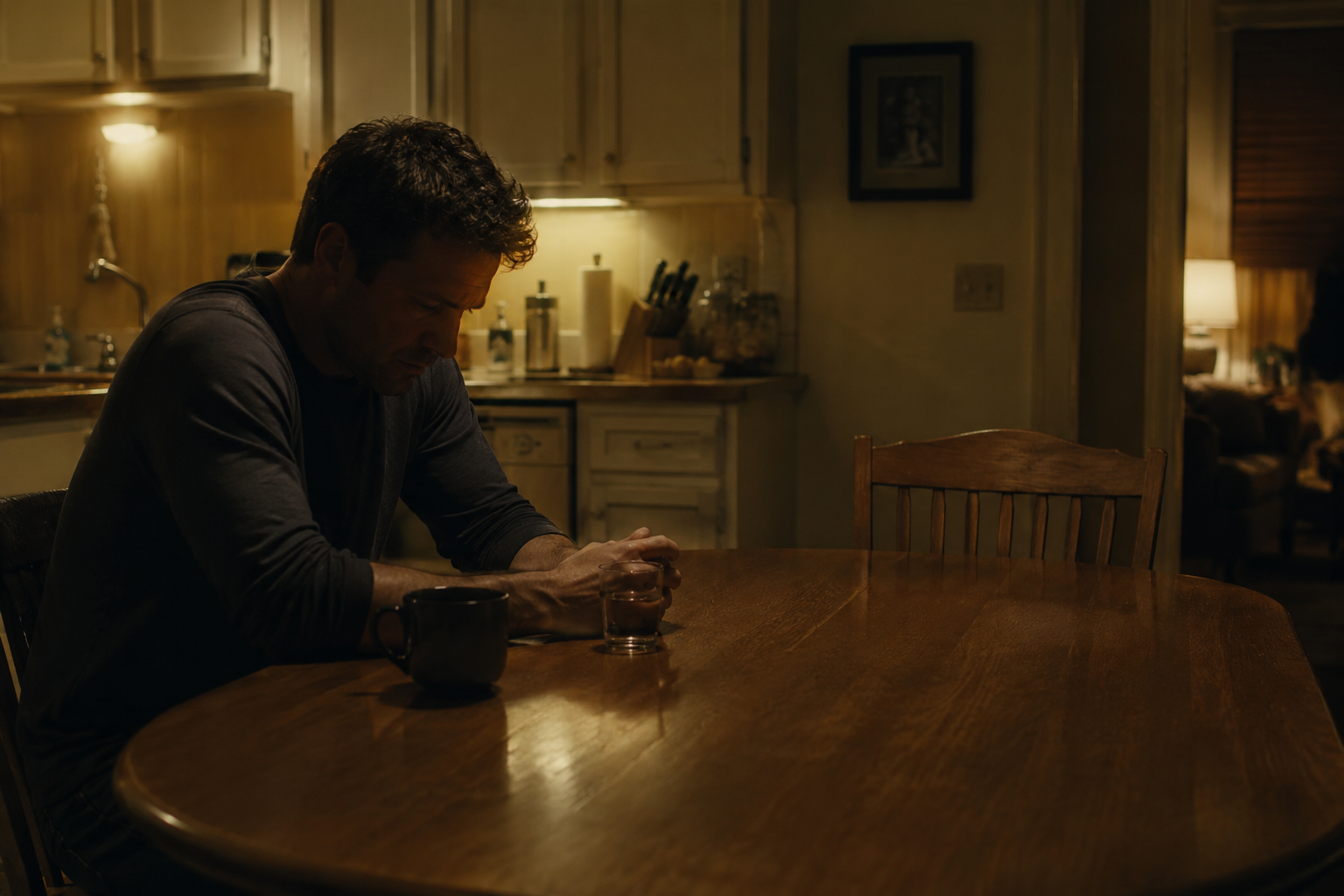
A lot of men tell me they have trouble being vulnerable, although they usually don’t say it exactly that way. More often I hear things like, “I don’t know what I’m feeling,” “I’m just not very emotional,” or “My wife wants me to open up, but I don’t know what she wants me to say.” Sometimes they simply say, “I’m fine.” And sometimes they really are fine. But sometimes “fine” means something happened so quickly inside them that they never had a chance to put words around it.
That is the part I’m interested in. I don’t think emotional vulnerability starts with sitting across from someone and revealing your deepest secret. For a lot of men, that would be starting at chapter twelve. I’m more interested in what happens thirty seconds before you shut down, get irritated, start explaining yourself, make a joke, pick up your phone, or leave the room.
Your wife asks why you seem distant. Your boss questions something you did. Your kid ignores you for the third time. Someone makes a comment that lands harder than you expected. Maybe your chest tightens. Maybe you feel hot. Maybe you suddenly want the conversation to be over. Maybe your mind immediately starts building a case for why the other person is wrong. Then comes the response: “I don’t want to talk about this.” “You’re making too big a deal out of it.” “I said I was sorry.” “Whatever.” Or maybe you don’t say anything at all.
That moment often gets described as an anger problem, a communication problem, or an inability to express feelings. Sometimes there is more going on. You got hurt, embarrassed, scared, rejected, or overwhelmed, and you got away from that feeling so quickly that anger, silence, logic, humor, work, your phone, or leaving the room took its place. The whole process can happen in seconds.
Many men get very good at this, and there are reasons for that. Boys often learn early which emotions are easier to show and which ones make them feel exposed. Anger can feel active and powerful. Sadness can feel much riskier. Solving a problem feels useful. Saying, “That hurt me,” may feel unfamiliar or even embarrassing. Over time, you learn to explain instead of feel, defend yourself instead of admit that you are embarrassed, become irritated when you are actually scared, or say you don’t care when caring feels dangerous.
Eventually, this may not even feel like something you are doing. It just feels like your personality. “I’m not a feelings guy.” Maybe. But I have met plenty of men who say they aren’t emotional while being angry for three days because their teenager barely spoke to them at dinner. The emotion is there. The problem is often getting access to it before something else takes over.
This is where vulnerability can become much more practical than people imagine. You don’t have to immediately produce a perfect explanation of what is happening inside you. You can start by catching the moment before your usual response. Maybe you notice, “My stomach dropped when she said that,” or, “I suddenly felt like I was being blamed.” Maybe you realize, “I wanted to get out of the room,” or, “I wanted to prove I was right.” Sometimes the most useful observation is also the simplest: “I felt stupid.”
Other feelings can be harder to admit. “I felt left out.” “I was jealous.” “I thought you were disappointed in me.” “I wanted you to notice me.” “I was afraid you didn’t need me.” These are ordinary human experiences, but many men have spent years translating them into something that feels safer. Jealousy becomes criticism. Fear becomes control. Hurt becomes distance. Shame becomes defensiveness. Loneliness becomes staying at work later.
None of this means every angry or quiet man secretly needs to cry. That isn’t the point. The goal is simply to get more accurate. If I am hurt but call it anger, I am probably going to do something with anger. If I am scared but tell myself I am annoyed, I will behave like an annoyed person. If I feel rejected but convince myself that I don’t care, the person I actually want connection with may experience me as distant. Getting the feeling right gives you more choices about what happens next.
You can practice this without becoming a different person. The next time you notice yourself getting defensive, don’t force yourself to explain everything. Try adding one honest sentence: “That actually embarrassed me.” “I know I seem angry, but I think I’m overwhelmed.” “I want to answer you, but right now I mostly want to shut down.” “I’m having a bigger reaction to this than I expected.” That is vulnerability too.
It may not look dramatic. Nobody needs to give a speech. Sometimes vulnerability is simply staying in the room ten seconds longer than you normally would. It is noticing the joke you were about to make because the conversation got uncomfortable. It is realizing that your long explanation is partly an attempt to make sure nobody thinks badly of you. It is being able to tell your partner, “I don’t know what I’m feeling yet, but I know something is happening.”
In therapy, this is often where we begin. Not with “Tell me everything.” More often, we slow down one of those moments and look at what happened right before you disappeared. What did you notice in your body? What did you assume the other person was thinking about you? What did you want to do next? What might you have said if you had not needed to protect yourself quite so quickly?
Those questions can uncover a lot. A man who thinks he has an anger problem may discover how easily he feels dismissed. A man who believes he is emotionally detached may realize how much rejection he expects. A man who shuts down during conflict may begin to notice the shame that arrives just before the silence. Once you can see the sequence, you have a better chance of changing it.
That is one of the things I like about therapy. You don’t have to become a completely different person, and you don’t have to suddenly become comfortable talking about every emotion you have ever had. You start by slowing down something that has been happening very fast. You get curious about the few seconds between what happened and what you did next.
Thirty seconds can be enough. Enough time to notice what is happening. Enough time to name something more accurately. Enough time to choose a different sentence or stay in the conversation a little longer. Over time, those small moments can change the way you handle conflict, closeness, anger, embarrassment, rejection, and the people who matter most to you.
If you recognize yourself somewhere in this, therapy doesn’t have to begin with knowing exactly what you want to talk about. We can start with the moments that keep repeating and figure out what is happening inside them.
Find the pattern. Change what comes next.
Interested in Therapy in Kansas City? Click to set up a free consultation.
Mr. Eko and the Person You Had to Become
Mr. Eko’s story asks a difficult question: what do we do with the versions of ourselves we became in order to survive? A look at shame, responsibility, old survival skills, and the possibility of understanding our past without spending the rest of our lives punishing ourselves.

Sometimes healing isn’t about becoming a better person. Sometimes it begins with understanding why you became that person in the first place.
There is something about Mr. Eko that makes him feel like he wandered into Lost from a different television show.
Most of the characters arrive on the Island carrying secrets, regrets, failed relationships, bad decisions. Eko arrives carrying something heavier. He carries an entire previous self.
Before Oceanic Flight 815, Eko had been many things. A frightened boy. A protector. A criminal. A violent man. A brother. Eventually, a priest. The strange thing is that none of these identities entirely cancels out the others.
They all remain inside him.
And maybe that is why Eko still feels so interesting twenty years later.
Because most of us, thankfully, don't have anything resembling his biography. But a lot of people eventually find themselves looking backward at some earlier version of themselves and wondering:
Who was that?
Why did I act that way?
And how much responsibility do I have for the person I became when I was simply trying to survive?
The First Thing Eko Does
When Eko is a boy in Nigeria, armed men enter his village and try to force his younger brother Yemi to kill an old man. Yemi cannot do it.
So Eko does it for him.
He takes the gun. He kills the man. And the soldiers take Eko away instead.
That one moment essentially divides two lives. Yemi eventually becomes a priest. Eko grows into a feared criminal and warlord. Years later their lives collide again, with devastating consequences, and after Yemi's death Eko eventually steps into his brother's role as a priest.
It would be easy to look at the adult Eko and say he became a bad man.
But Lost gives us the childhood scene first.
That matters.
Before we see what Eko became, we see what happened to him.
And, even more importantly, we see what he was trying to do.
He was protecting his brother.
This doesn't erase everything that comes afterward. Understanding someone's history isn't the same thing as excusing everything they have done. Therapy gets into trouble when it confuses those two things.
But context changes the story.
The first violent act of Eko's life is also an act of love.
That is a terrible psychological knot.
The Versions of Ourselves We Don't Like
I sometimes think people come into therapy believing there is a courtroom hidden somewhere in the office.
Sooner or later, all the evidence is going to be presented.
The bad relationship.
The years of drinking too much.
The affair.
The angry father.
The checked-out husband.
The person who disappeared when somebody needed him.
The years spent pleasing everybody.
The years spent caring about nobody.
Eventually there will be a verdict.
Who was I really?
I don't think most people say it quite that dramatically. Usually it sounds more ordinary.
"I don't know why I did that."
"I wasn't a very good husband then."
"I wasted a lot of years."
"I was kind of an asshole."
"I should have known better."
Maybe.
But one of the more interesting questions is what happens when we replace What's wrong with that person? with:
What was that version of you trying to accomplish?
Sometimes the answer isn't flattering.
But sometimes it makes surprising sense.
He was trying not to be humiliated.
She was trying not to be abandoned.
He was trying to never feel as powerless as he felt growing up.
She was trying to make sure everybody stayed happy so nobody left.
He became intimidating because being scared felt unbearable.
She became invisible because being noticed never felt safe.
Somewhere along the way, a strategy became a personality.
And then twenty or thirty years passed.
The Problem With Survival Skills
The difficult thing about survival skills is that they often work.
That's why we keep them.
A kid learns that emotions get him mocked, so he stops showing them.
It works.
A teenager discovers that being funny keeps people from noticing how insecure she feels.
It works.
A young man realizes anger makes people back off.
That works too.
Somebody else becomes indispensable. Someone becomes charming. Someone becomes agreeable. Someone never needs anything. Someone learns how to leave before the other person can.
These aren't usually decisions made at a kitchen table.
Nobody says, "Beginning Monday, I will construct a defensive personality that will create relationship problems for me in approximately twenty-seven years."
You adapt.
Then you forget you adapted.
Eventually the armor starts to feel like your skin.
Eko is an extreme version of this. The boy who picks up the gun eventually becomes a man for whom violence is ordinary.
But somewhere inside that man is still the older brother trying to protect Yemi.
That doesn't make the violence good.
It makes the story more complicated.
People are complicated.
"I Did the Best I Could"
Near the end of Eko's story, Lost does something I still find unusual.
Eko is confronted by what appears to be Yemi and told to confess.
This should be the redemption scene.
Television has trained us for it.
The sinner finally admits everything. He collapses. He asks forgiveness. The music swells. We understand that he has finally recognized the error of his ways.
Eko refuses.
He doesn't claim that everything he did was good. Instead, he rejects the idea that his life can be reduced to a list of sins requiring someone else's judgment. He says, essentially, that he was given a particular life and did what he could with it. Soon afterward, the figure of Yemi disappears and Eko encounters the Monster for the final time.
When I first watched Lost, I wasn't sure what to make of that scene.
Was Eko refusing accountability?
Was he still unable to see what he had done?
Was this pride?
Watching it now, I hear something else.
I hear a man refusing to hate himself.
And those are not the same thing.
Shame Loves a Rewrite
Shame has an interesting habit.
It takes what we know now and gives it to the person we were then.
Of course I should have left.
Of course I should have spoken up.
Of course I shouldn't have married that person.
Of course I should have stopped drinking.
Of course I should have been more present with my children.
Of course I should have known.
But you didn't know everything you know now.
You didn't have the perspective you have now.
You didn't necessarily have the emotional language, support, confidence, money, sobriety, safety, maturity or experience you have now.
You were standing somewhere else.
That doesn't mean we erase responsibility.
It means we stop pretending the past happened with today's information.
That's one of the cruel little tricks of regret.
Responsibility Without Self-Destruction
This can become especially complicated for men.
A lot of men I meet seem to have only two available positions when they think about something they've done wrong.
Defend it.
Or destroy themselves over it.
"I didn't do anything wrong."
Or:
"I'm a terrible person."
There isn't much room between them.
But that middle space is where a lot of therapy happens.
I hurt someone.
I understand more now about why I did it.
I wish I had done something different.
I may need to repair what I can.
And I don't have to spend the rest of my life punishing myself.
All of those things can be true at once.
That's not getting yourself off the hook.
It's recognizing that living permanently on the hook doesn't help anybody either.
Eko's story pushes against the fantasy that healing requires putting our former selves on trial.
Maybe something more useful is possible.
We can become curious about them.
The Boy Before the Man
One of the things Lost understood better than almost any television show of its era was that nobody simply arrives in the present.
Jack isn't just Jack.
Sawyer isn't just Sawyer.
Kate isn't just Kate.
Locke certainly isn't just Locke.
Every person walking around that Island has previous versions of themselves following a few steps behind.
The flashbacks made that literal.
We watched somebody behave badly on the Island, and then suddenly it was twenty years earlier.
There was the father.
The mother.
The humiliation.
The loss.
The moment the pattern started making sense.
Real life doesn't provide flashbacks so conveniently.
A husband becomes furious because his wife asks one seemingly ordinary question.
A woman panics because a text hasn't been answered.
A man shuts down during an argument and can't explain why.
Someone hears criticism where none was intended.
Someone feels abandoned because another person needs an evening alone.
Suddenly the emotional temperature is completely out of proportion to what's happening.
Except maybe it isn't.
Maybe we're watching two timelines at once.
The present moment.
And the older one hiding underneath it.
You Don't Have to Kill Him Off
There is a temptation in self-improvement culture to constantly announce new versions of ourselves.
The new me.
The healed me.
The sober me.
The confident me.
The person who finally has boundaries.
Maybe.
But I've never been convinced that growth works by eliminating previous versions of ourselves.
I think they stay.
The frightened kid.
The angry twenty-year-old.
The person who stayed too long.
The person who ran away.
The version who needed everybody to approve.
The version who didn't trust anyone.
Hopefully they don't run things anymore.
But they remain part of the cast.
Maybe the goal isn't to get rid of them.
Maybe it's to finally understand what job they were doing.
And then let them know they don't have to do it anymore.
What Mr. Eko Knew
Eko never gets the long redemption arc that some of the other characters receive.
His story ends abruptly.
Maybe that is part of why he has stayed with me.
There isn't a neat transformation where the old Eko disappears and the good Eko takes his place.
Both men exist simultaneously.
The man of violence.
The man of faith.
The criminal.
The priest.
The brother who caused tremendous damage.
The brother who once sacrificed himself to save a frightened little boy from pulling a trigger.
Lost doesn't resolve the contradiction.
It leaves us with it.
And maybe that is closer to how people actually change.
Not by proving that the old version of us was secretly good.
Not by deciding he was irredeemably bad.
But by being able to look backward and finally say:
I understand why you became that person.
I understand what you were trying to survive.
And you don't have to live that way anymore.
Christian Shephard and the Parents We Keep Talking To
Christian Shephard spent much of his life hiding shame behind authority, alcohol, and distance. A Pop Therapy look at how his failures as a father shaped Jack—and how emotional wounds can be passed down even when love is still present.

One of the strangest things about Christian Shephard is that he’s dead before LOST even begins.
And yet he’s everywhere.
He’s in Jack’s anger. He’s in Jack’s need to fix things. He’s in Claire’s story before she even realizes he’s part of it. He’s walking around the Island in white tennis shoes. He’s standing in hospitals and bars and memories. And years after his death, Jack is still having arguments with him.
That’s probably the part that interests me most as a therapist.
Because sometimes a relationship doesn’t end when the person leaves.
Sometimes it moves inside.
You Don’t Have What It Takes
One of the defining wounds between Christian and Jack comes from something Christian tells him when Jack is young: he doesn’t have what it takes.
Christian believes Jack doesn’t know how to fail. He cares too much. He takes responsibility for things he can’t control. And Christian seems to think he’s preparing his son for the world by hardening him.
But children don’t usually hear parental criticism as philosophy.
They hear it as truth.
There’s something wrong with me.
Jack spends much of his adult life seemingly trying to disprove that sentence.
He becomes a spinal surgeon. He fixes impossible things. He takes responsibility when nobody asks him to. On the Island, he almost immediately becomes the person everyone looks toward when something goes wrong.
From the outside, it looks like leadership.
Underneath it, there may be something much older happening.
See, Dad?
I do have what it takes.
When the Parent Moves Inside
This is something I see in therapy all the time.
A person may be 35 or 45 or 60 years old. Their parents may live hundreds of miles away. They may barely speak to them. Their parents may even be dead.
And they’re still having the conversation.
You can hear it in sentences like:
I should be doing more.
I shouldn’t need anybody.
I can’t screw this up.
I have to keep everyone together.
If something goes wrong, it’s my fault.
At some point, we don’t need the original person there anymore.
We’ve learned the lines.
This doesn’t mean our parents were monsters. That’s another story we sometimes tell too easily.
Christian certainly isn’t one.
He’s much more uncomfortable than that.
Christian Wasn’t Just a Bad Father
One reason Christian works so well as a character is that LOST refuses to make him simple.
He’s capable of tenderness and cruelty. He can understand someone else’s pain while completely failing to understand his own. He’s a gifted doctor whose drinking destroys his career. He loves Jack and wounds Jack. He can offer surprisingly good advice to strangers while making a complete mess of his own family.
In other words, he’s a person.
That’s important.
Therapy sometimes involves reaching the strange place where we can hold two things at once:
My parent loved me.
And:
My parent hurt me.
One doesn’t cancel out the other.
Growing up often means giving up the trial where we’re trying to determine whether somebody was ultimately “good” or “bad.”
The more useful question becomes:
What did I learn from being loved by this particular person?
And maybe more importantly:
What am I still carrying?
Jack Keeps Looking for His Father
After the crash, Jack sees Christian on the Island.
And he follows him.
There’s something almost embarrassingly human about that.
You can become a successful surgeon. You can become the leader everyone depends on. You can survive a plane crash on a mysterious Island.
And some part of you can still be a kid following your father into the woods.
Jack eventually finds Christian’s coffin.
It’s empty.
I’ve always loved that image.
The thing Jack has been chasing isn’t really there.
And yet the chase is real.
That’s how old family patterns often work.
We spend years trying to finally get something from someone who may no longer be capable of giving it to us.
Approval.
An apology.
Recognition.
Permission.
Some acknowledgment that says:
Yes. I see what happened.
Sometimes we get it.
Sometimes we don’t.
And eventually another question appears.
If they never give it to me, what happens to my life?
The Conversation Changes
This is why the final scene between Jack and Christian means more to me now than it did when LOST originally aired.
Jack enters the church.
He sees his father’s coffin again.
He opens it.
Empty.
Then Christian is standing behind him.
Jack turns around and asks the question that has been underneath so much of the series:
“How are you here?”
Eventually Jack understands.
He died too.
And then something happens that is almost shockingly simple.
Christian hugs him.
Jack collapses into his father’s arms.
There is no evaluation.
No lecture.
No “you should have.”
No discussion of whether Jack had what it takes.
The argument is over.
Maybe That’s What Jack Was Looking For
I don’t think healing always means forgiving our parents.
And I don’t think it means discovering that everything they did was secretly okay.
Sometimes healing is much less dramatic.
It’s realizing that you don’t have to keep presenting your case.
You don’t have to keep succeeding to prove something.
You don’t have to keep failing to prove something either.
You don’t have to spend the rest of your life answering a sentence somebody said to you when you were ten years old.
At some point, the question becomes less about what they thought of you.
It becomes:
What do you think of you?
Christian Shephard spends most of LOST as a ghost.
But maybe the most important ghost isn’t the man Jack keeps seeing on the Island.
It’s the voice Jack has carried around inside himself.
And in the end, Jack doesn’t defeat it.
He doesn’t argue with it.
He doesn’t finally prove it wrong.
He walks into a room, sees his father, and realizes there is nothing left to prove.
Then his father holds him.
And Jack lets himself be held.
Sometimes that’s what letting go looks like.