Locke and the Need to Believe in Something
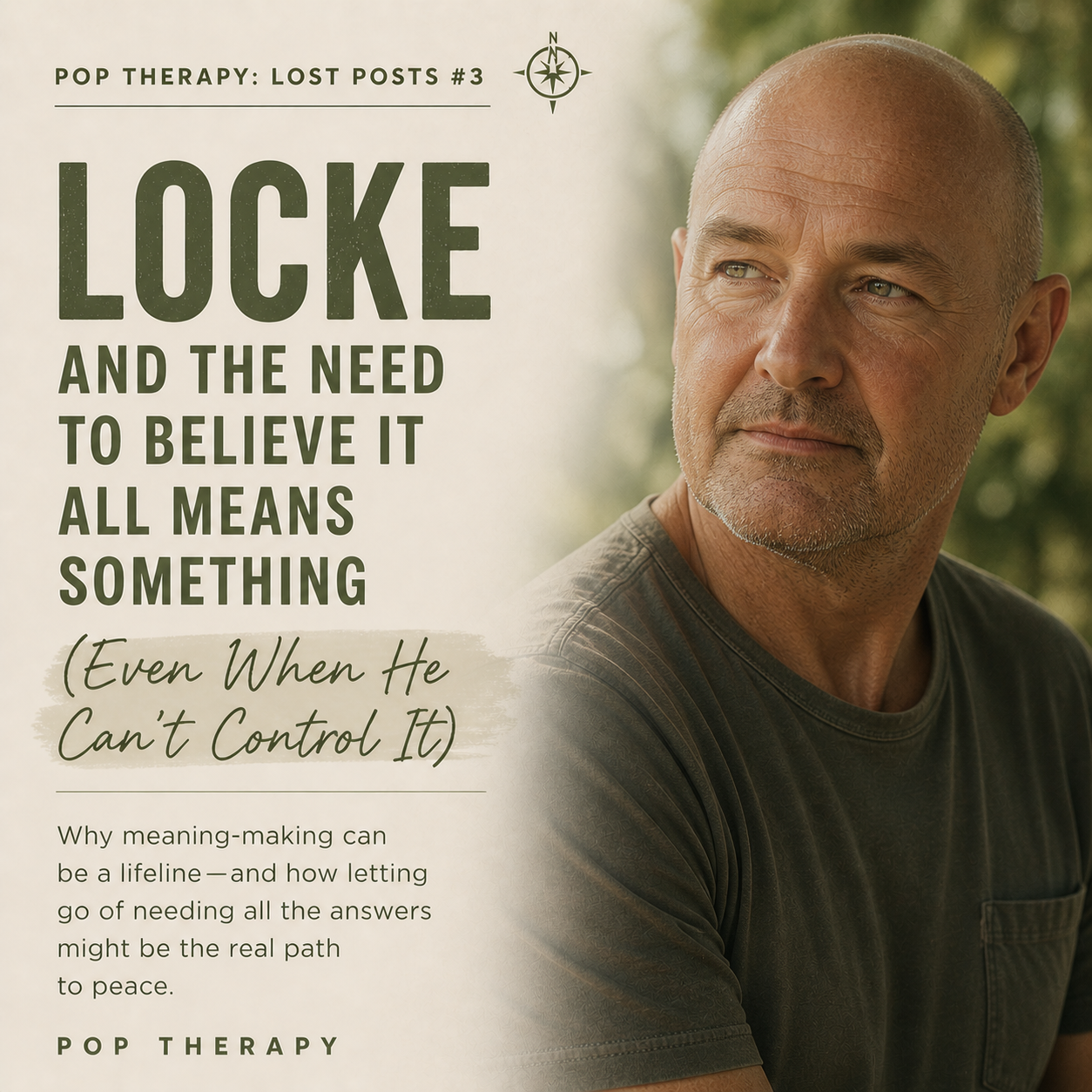
Locke doesn’t hesitate.
Where others question, he commits.
Where things don’t make sense, he finds meaning.
Not randomly.
Not carelessly.
Deliberately.
He believes there’s something larger happening.
Something that explains all of it.
And once he locks into that, he moves with certainty.
The Pattern
There’s a version of this that shows up in real life.
You don’t stay in uncertainty for long.
You look for:
meaning
direction
something to hold onto
And when you find it, it clicks.
Things feel clearer.
More organized.
More certain.
It’s not about being naïve.
It’s about not wanting to feel lost.
What’s Actually Driving It
This isn’t really about belief.
It’s about uncertainty.
There’s usually a moment—subtle but uncomfortable—where something feels unclear:
what this means
what direction to go
whether something matters
And instead of staying there, you move toward meaning.
You find a framework.
A story.
A belief that organizes everything.
And the discomfort drops.
Why It Works (and Why It Doesn’t)
This pattern works because it creates:
clarity
purpose
direction
You feel:
grounded
certain
like you’re moving forward
But over time:
nuance gets lost
conflicting information gets ignored
you can become rigid without realizing it
Not because you’re trying to be.
Because the alternative feels too uncertain.
How This Shows Up in Relationships
This is where it becomes more visible.
You:
interpret situations quickly
assign meaning to behavior
feel confident about what’s happening
But the other person may feel:
misunderstood
simplified
like there isn’t room for their perspective
And when they push back, it can feel like:
they’re disrupting something that finally makes sense
So you hold your position.
And the distance grows.
Where This Starts
At some point, uncertainty likely didn’t feel safe.
Maybe:
things were unpredictable
there wasn’t clear direction
you had to figure things out on your own
So you developed something that helped:
👉 a way to create meaning quickly
It worked.
It gave you structure.
But what helped then can quietly limit you now.
The Cost
The cost isn’t belief itself.
It’s what gets excluded.
complexity
contradiction
other perspectives
your own doubt
And over time:
You can feel certain…
but also disconnected from what’s actually happening.
The Shift
This isn’t about giving up belief.
That’s not the goal.
The shift is smaller.
It happens in the moment when something doesn’t fully fit.
Instead of resolving it immediately, you pause.
And ask:
What if I don’t have to decide what this means yet?
That question creates space.
Not chaos.
Just space.
A Different Way of Holding Meaning
There’s a version of this that evolves.
You still care about meaning.
You still look for direction.
But you also:
leave room for uncertainty
allow multiple possibilities
stay open a little longer
It doesn’t make you less grounded.
It makes you more flexible.
Back to Locke
Locke isn’t wrong for wanting meaning.
It gives him direction.
It gives him purpose.
But the same certainty that helps him move forward
can also keep him from seeing what doesn’t fit.
That’s the tradeoff.
Where This Leaves You
If this feels familiar, there’s nothing to fix.
This pattern likely helped you make sense of things when it mattered.
But it might also be shaping how you interpret your life now.
This week, notice one moment when something feels unclear.
Instead of resolving it immediately, pause.
Just long enough to stay with the uncertainty.
That’s where something new can happen.
Touch Base
If this pattern shows up in your life and you want to work through it more directly: