
Be Strong. Open Up. Don’t Be Too Much.The Mixed Messages Men Carry About Masculinity and Mental Health
Men are told to be strong, open up, provide, stay present, ask for help, and never become too much. Therapy can help men sort through these mixed messages and build a version of masculinity with more choice, honesty, and range.
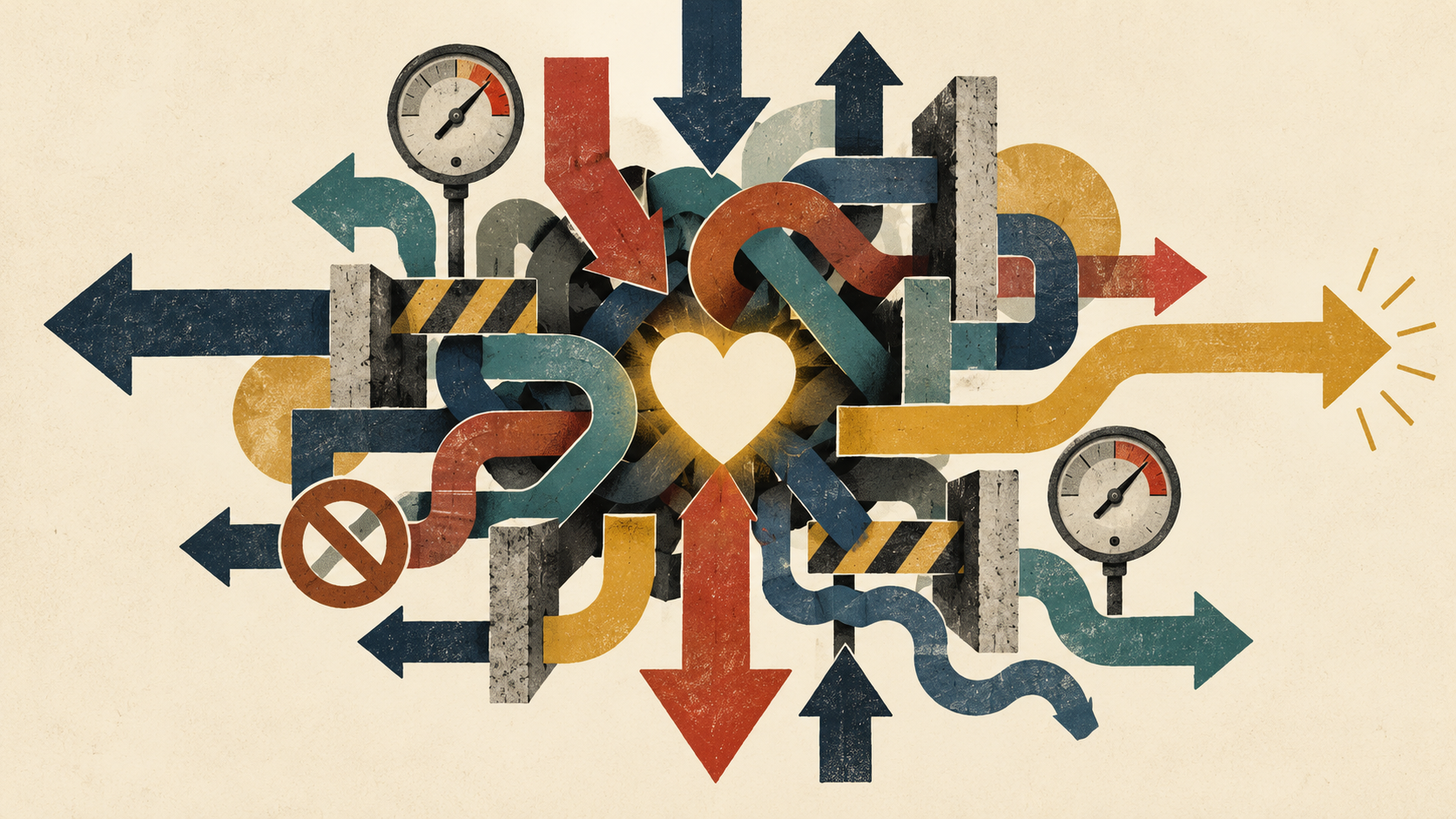
A man in my office once said, “I know I’m supposed to talk about my feelings. I just feel like I’m doing it wrong.”
He was not against therapy. He knew words like attachment, triggers, and emotional availability. He wanted to be a good husband and father. He wanted to communicate better.
But he also felt trapped.
If he spoke while he was upset, he worried he would come across as angry or unsafe. If he waited until he had settled down, his wife experienced him as shut down. If he tried to solve the problem, he was told he was not listening. If he admitted that he needed reassurance, he felt weak and ashamed.
Finally, he asked, “What am I actually supposed to be?”
It is a question I hear in different forms from a lot of men.
The Rules Changed, but the Old Rules Never Left
Many men grew up with a clear, if limited, picture of masculinity: work hard, provide, protect, stay calm, and handle your own problems. Do not complain. Do not cry. Do not let anyone see you lose control.
Reliability, courage, responsibility, and steadiness matter. But when those qualities become rigid rules, a man can disappear inside them.
Today, men also hear a newer set of expectations. Be vulnerable. Talk about your feelings. Be emotionally present. Ask for help. Make room for other people’s experiences. Do not use anger to avoid what hurts.
Those are healthy invitations. The trouble is that the old rules did not simply vanish when the new ones arrived.
A man may be told to open up, yet feel people pull away when his feelings are messy. He may be encouraged to ask for help, while believing he is valued most when he is useful. He may be expected to provide like earlier generations and parent with an emotional presence those generations were rarely taught.
The messages often sound like this:
Be confident, but never controlling.
Be strong, but also vulnerable.
Be a provider, but do not let work take you away from your family.
Share your feelings, but do not make anyone responsible for them.
Take initiative, but know when to step back.
Ask for help, but remain dependable.
Each can make sense. Trying to meet all of them without knowing how they fit together can leave a man tense, ashamed, and unsure of himself.
Men’s Distress Does Not Always Look Like Sadness
The National Institute of Mental Health notes that mental health struggles in men can show up as anger, irritability, sleep problems, substance use, risk-taking, physical complaints, or feeling emotionally flat. Men are also less likely than women to have received treatment. The CDC reports that in 2024, the suicide rate among males was nearly four times the rate among females.
This matters because a man may not say, “I’m depressed.”
He may say, “Everybody needs something from me.”
He may work longer hours, drink more, scroll late into the night, lose interest in sex, become short with his children, or stop returning friends’ messages. He may call it stress because stress feels practical. Stress sounds like something a competent person can manage.
Underneath it may be fear, grief, loneliness, shame, or a growing sense that his life no longer fits.
My clients know I am always asking, “Where do you feel that in your body?” The answer may be pressure in the chest, heat in the face, a clenched jaw, or a heavy feeling behind the eyes.
The body often knows there is a problem before the story is ready to admit it.
Masculinity Is Not the Diagnosis
Some conversations treat masculinity itself as something men need to overcome. That creates another trap. A man who already feels uncertain may hear that even his wish to be strong, capable, protective, or respected is suspect.
An online world is ready to answer that shame with another rigid script: dominate, never apologize, need no one, and treat every relationship as a contest for power.
Both messages flatten men.
The healthier question is not, “Is masculinity good or bad?” It is, “Does the way I learned to be a man give me choices?”
Strength can mean taking action. It can also mean staying in a hard conversation without becoming cruel or disappearing. Protection can mean defending someone from danger. It can also mean creating enough safety for your child to tell you the truth. Responsibility can mean paying the bills. It can also mean admitting when your anger is hurting the people you love.
The goal is not to make men less masculine. It is to make masculinity roomy enough for a full human life.
From Performance to Choice
In therapy, we can begin by slowing the pattern down.
What is the story you are telling yourself? Maybe it is, “If I need help, I have failed.”
What feeling is under that story? Fear? Shame? Sadness?
Where does it live in your body?
What do you usually do next? Get loud? Fix? Joke? Work? Withdraw?
And then comes the important question: What choice do you want to make now?
That choice may be saying, “I am getting defensive, but I do not want to leave this conversation.” It may be calling a friend before the crisis, setting a boundary instead of building resentment, or making a therapy appointment before your relationship, health, or work forces the issue.
This is not weakness. It is a different kind of self-command—the ability to notice what is happening inside you without automatically obeying it.
A Better Question About Being a Man
Maybe the question is not, “Am I doing masculinity correctly?”
Maybe it is:
Which parts of being a man feel true to me?
Which parts are performances I learned to survive?
Where am I dependable for everyone except myself?
What emotion do I turn into anger, distance, or work?
What would strength look like if it included honesty?
Men do not need one more impossible standard. They need room to examine the standards they inherited and decide what they want to carry forward.
In my work with men in Kansas City, therapy is not about taking away toughness, independence, humor, ambition, or strength. It is about adding range. A man can be steady and need support. He can be accountable without living in shame. He can care for other people without abandoning himself.
He can stop performing manhood long enough to become more fully himself.
You do not have to heal yourself alone.