Hurley and the Fear That It Will All Fall Apart
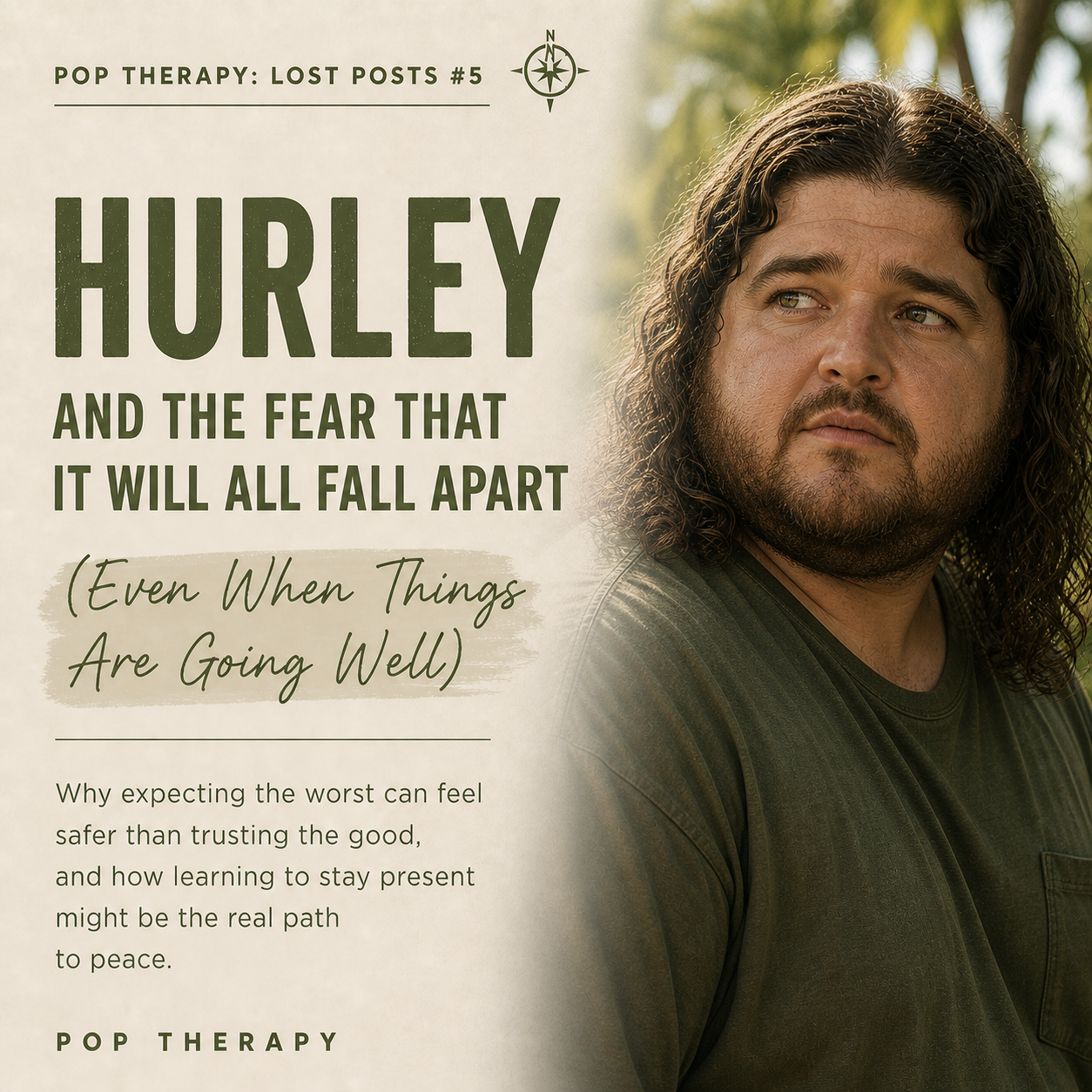
If you’ve watched Lost, you know Hugo "Hurley" Reyes isn’t just the comic relief.
He’s the one who’s waiting for the other shoe to drop.
Even when things are going well.
Especially then.
The Pattern Beneath the Anxiety
Hurley doesn’t trust good things to last.
Not because he’s negative.
Because his experience has taught him:
If something feels good, it probably won’t stay that way.
So even in moments of connection, success, or calm…
There’s a quiet tension underneath it:
When is this going to go wrong?
What did I miss?
What’s about to fall apart?
That tension doesn’t shut off just because life improves.
What This Looks Like in Real Life
This pattern shows up in ways that don’t always look like anxiety at first:
You finally get something you wanted… and can’t enjoy it
You scan for problems even when nothing is wrong
You feel responsible for preventing things from going bad
You brace yourself during good moments instead of relaxing into them
You think: “Don’t get too comfortable”
From the outside, it can look like overthinking.
From the inside, it feels like staying prepared.
Why “Good” Can Feel So Unstable
For some people, unpredictability wasn’t the exception growing up.
It was the baseline.
So the nervous system learns:
Good moments are temporary
Stability is fragile
If you relax, you’ll get blindsided
Which leads to a hard-to-see loop:
You don’t trust good things →
You stay tense →
You never fully experience them →
Which reinforces the idea that something is off
Hurley and the Need to Make Sense of It All
Hurley tries to solve the feeling by explaining it.
The numbers. The curse. The meaning behind everything.
If he can just figure it out, maybe he can control it.
A lot of people do this in quieter ways:
trying to “figure out” why things are going well
looking for hidden problems
assuming there must be a catch
Because if there’s a reason, maybe there’s a way to stay safe.
What’s Actually Underneath
This isn’t really about pessimism.
It’s about protection.
At some point, being caught off guard hurt.
So now your system says:
Stay ready. Don’t relax too much. Don’t trust it fully.
The problem is, that same protection keeps you from feeling what you actually want:
ease
enjoyment
connection that lands
The Shift: Letting Good Things Be Good
This isn’t about “thinking positive.”
It’s about building tolerance for something unfamiliar:
things going well.
That might look like:
noticing when something is good without immediately analyzing it
catching the urge to scan for problems
letting a moment land before questioning it
saying (even quietly): “Nothing is wrong right now.”
Not forever.
Just right now.
A Simple Check-In
Next time something good is happening, pause and ask:
What am I expecting to go wrong?
Do I have evidence for that right now?
Can I let this moment be what it is, just for a few seconds?
You don’t have to convince yourself everything will be fine.
Just notice what your system is doing.
Hurley, Revisited
Hurley’s story isn’t about being “unlucky.”
It’s about someone trying to feel safe in a world that hasn’t always made sense.
And slowly—on the island—he starts to do something different.
He stays.
He connects.
He lets moments matter, even without guarantees.
If This One Feels Familiar
You’re not broken if you struggle to enjoy good things.
You may have just learned that good things don’t last.
That’s a pattern.
And patterns can shift.
Not all at once.
But enough to start feeling your life as it’s actually happening—not just bracing for what might come next.
Next in the Pop Therapy series: Sayid and the weight of what you’ve done—and what you believe it says about you.