Desmond Hume and the Life You Keep Postponing
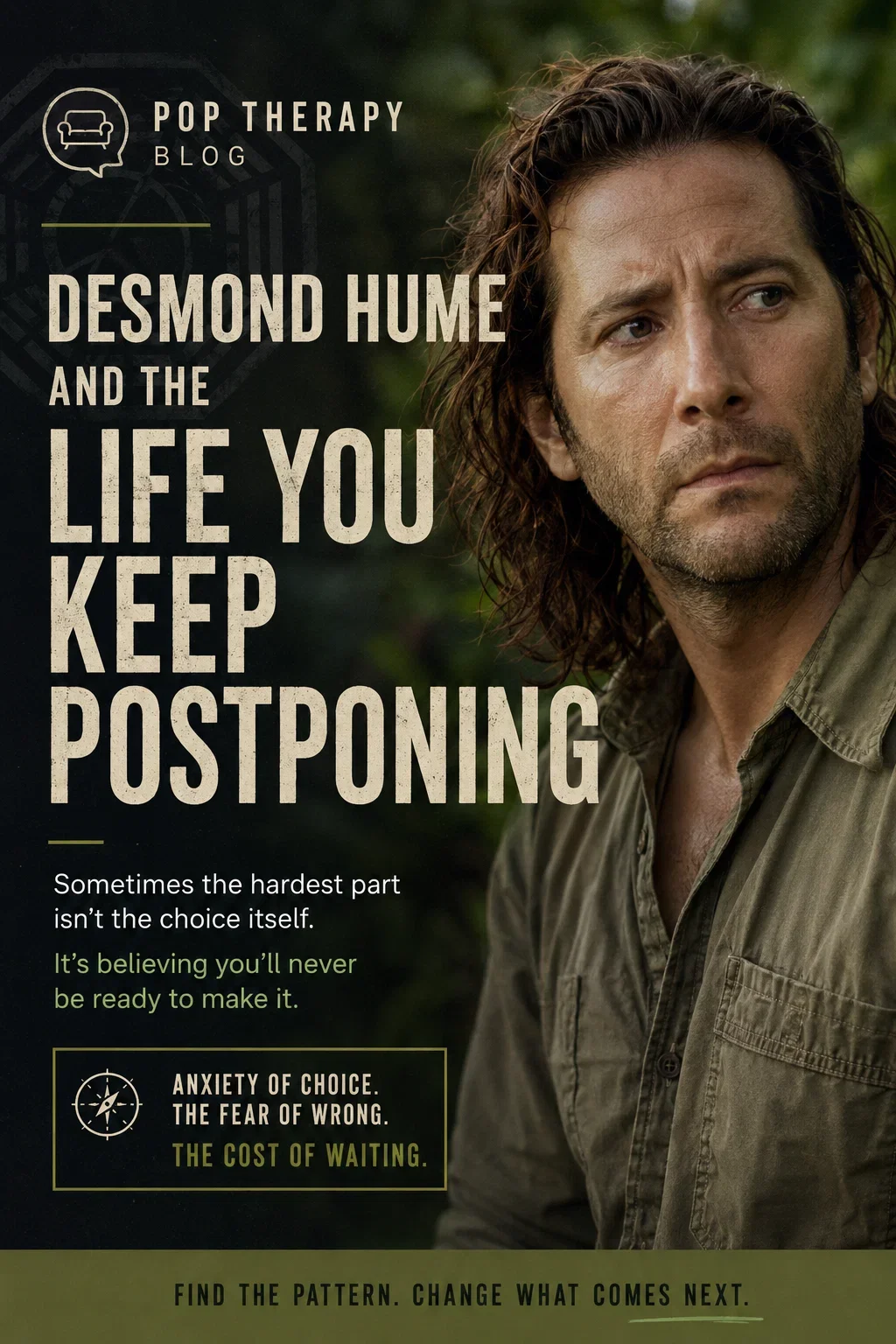
Desmond spent most of Lost trying to outrun a decision.
Not just a bad decision.
A final one.
He wanted certainty before committing to a path. Before loving fully. Before trusting himself. Before becoming the kind of man he hoped he could be.
So he drifted.
From the monastery.
To the military.
To the Island.
To the hatch.
Always moving. Always searching for the thing that would finally make him feel ready.
A lot of people live like that.
They tell themselves they’re “thinking it through.”
“Waiting until things calm down.”
“Trying to make the right choice.”
But underneath it is often fear.
Fear that one wrong move could collapse the entire future.
So instead of choosing, they hover.
They overthink relationships.
Stay stuck in jobs they hate.
Wait to feel confident before taking action.
Keep searching for some sign that guarantees safety.
But life usually doesn’t work like that.
Desmond’s whole story is about realizing that certainty is never coming.
At some point, you stop trying to predict every possible future and start participating in the one that’s actually happening.
That’s the shift.
Not becoming fearless.
Not suddenly becoming “sure.”
Just becoming willing.
Willing to risk disappointment.
Willing to stop rehearsing life and actually enter it.
A lot of anxiety comes from trying to solve the future before you live the present.
But the future is shaped by movement, not endless calculation.
That’s something I see often in therapy with men especially.
The feeling that life is somehow waiting to begin once they finally “figure themselves out.”
Meanwhile years pass.
Relationships drift.
Creativity shrinks.
The world gets smaller.
The Island in Lost had a way of forcing people into the present.
No more endless escape routes.
No more pretending there would always be another timeline later.
Eventually the question becomes:
What would your life look like if you stopped waiting to feel completely ready?
And what small move would count as beginning now?
If this pattern feels familiar, you may also want to read more about Temporal Narrative Therapy and how old timelines can keep people emotionally stuck in the present.
Find the pattern. Change what comes next.