Juliet Burke and the Slow Disappearance of Yourself
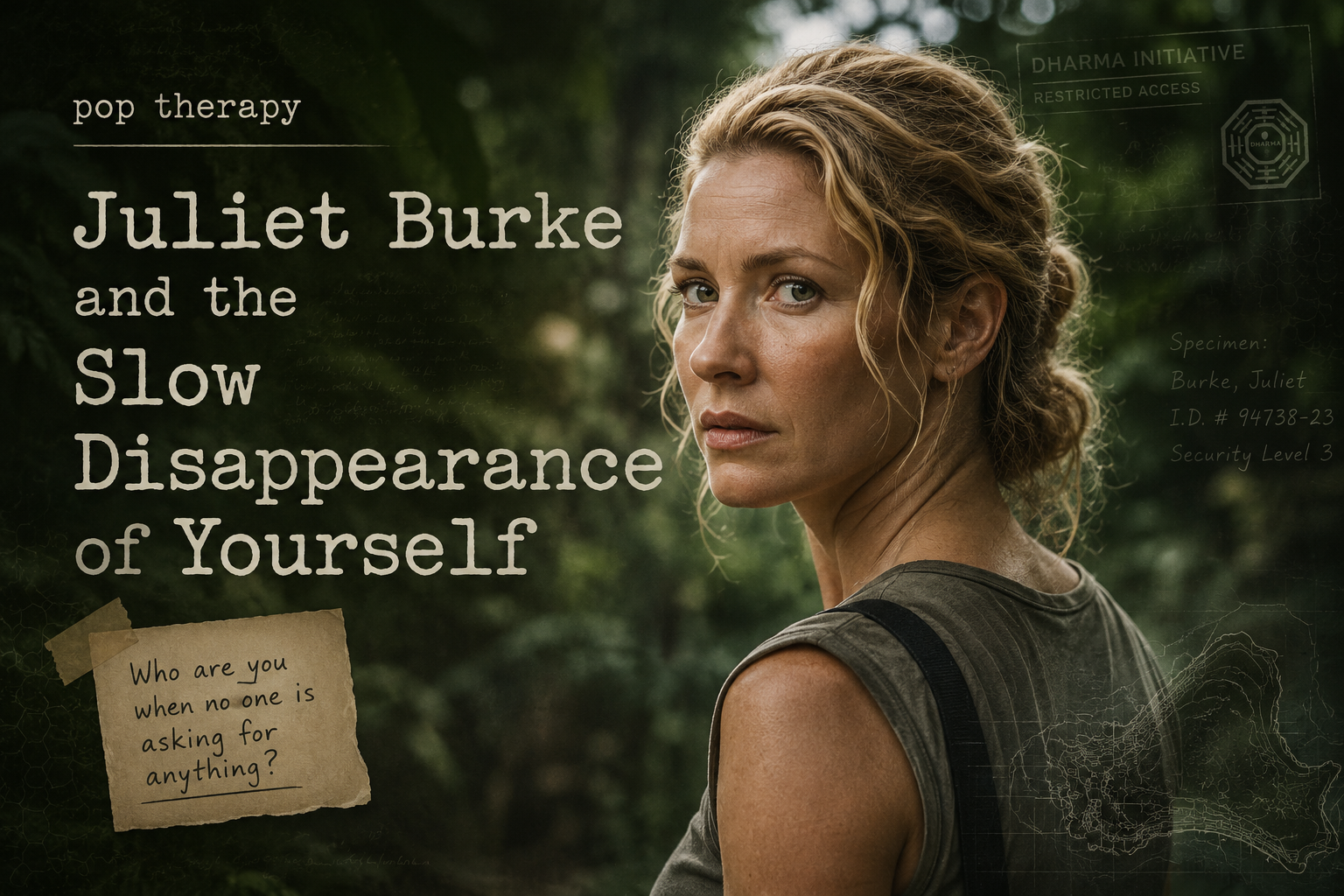
Most people see Juliet as someone who gave up everything for love, but I don’t think that’s really her story. It feels more like she spent years becoming whoever the people around her needed her to be until she slowly forgot she had once been someone else. Ben needed something from her. The Others needed something from her. The fertility project needed something from her. Jack did. Sawyer did. Even the people who genuinely cared about her often leaned on the version of Juliet who could solve problems, keep going, and carry more than her share.
I see that same pattern in therapy. These aren’t dramatic stories. They’re usually thoughtful, capable people who have become so good at adapting that everyone naturally begins relying on them. They read the room before anyone else does. They say yes almost automatically. They anticipate what other people need before they’ve even considered what they need themselves. Over time, a quiet kind of exhaustion settles in. Eventually they say something that almost feels embarrassing to admit out loud: “I don’t really know what I want anymore.”
One of the things LOST understood so well is how identity slips away. It usually isn’t one life-changing event. It’s a thousand small decisions that all make perfect sense in the moment. You accommodate. You adjust. You keep the peace. You tell yourself it’s temporary. Then one day you realize those decisions have started to feel more familiar than the person who made them. Juliet spends much of the series living inside stories that other people have written for her. Ben writes one version. The Island writes another. Even love can become another script if you’re not paying attention.
Therapy isn’t always about dramatic breakthroughs, either. Sometimes it’s simply noticing how many of your choices are driven by avoiding disappointment, conflict, guilt, or rejection. The voice underneath all of that is usually still there. It’s just gotten quieter over the years. Losing yourself rarely happens all at once, and finding yourself again usually doesn’t either. It often begins with one honest conversation. One unexpected no. One decision that isn’t made to keep everyone else comfortable.
That’s the part of Juliet’s story that has stayed with me. Most of us aren’t trying to escape a mysterious island. We’re just trying to remember who we were before we became so good at fitting ourselves around everyone else’s expectations.
Interested in giving therapy a try? I offer a free consultation to see if things are a good fit.