Sometimes healing isn’t about becoming a better person. Sometimes it begins with understanding why you became that person in the first place.
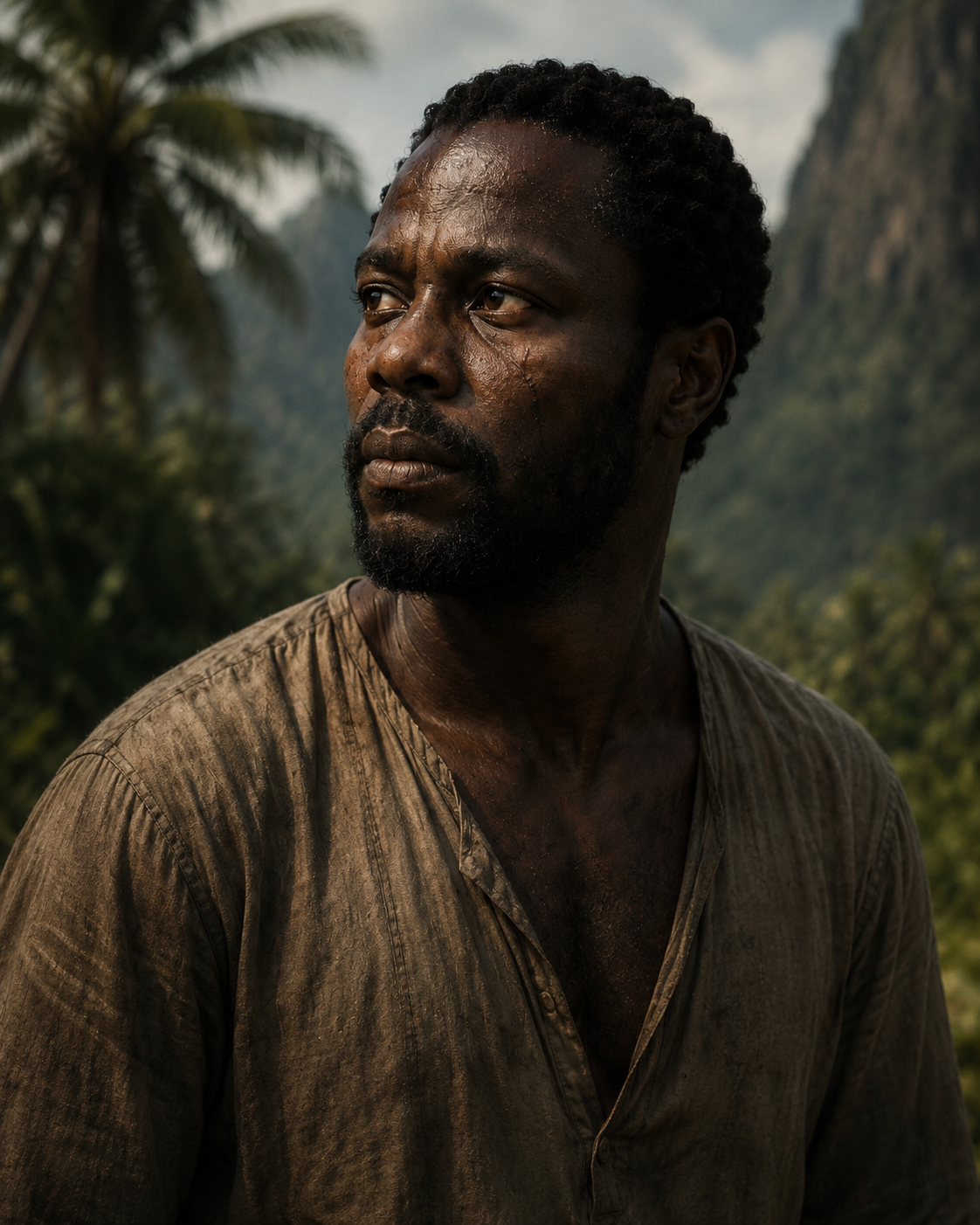
There is something about Mr. Eko that makes him feel like he wandered into Lost from a different television show.
Most of the characters arrive on the Island carrying secrets, regrets, failed relationships, bad decisions. Eko arrives carrying something heavier. He carries an entire previous self.
Before Oceanic Flight 815, Eko had been many things. A frightened boy. A protector. A criminal. A violent man. A brother. Eventually, a priest. The strange thing is that none of these identities entirely cancels out the others.
They all remain inside him.
And maybe that is why Eko still feels so interesting twenty years later.
Because most of us, thankfully, don't have anything resembling his biography. But a lot of people eventually find themselves looking backward at some earlier version of themselves and wondering:
Who was that?
Why did I act that way?
And how much responsibility do I have for the person I became when I was simply trying to survive?
The First Thing Eko Does
When Eko is a boy in Nigeria, armed men enter his village and try to force his younger brother Yemi to kill an old man. Yemi cannot do it.
So Eko does it for him.
He takes the gun. He kills the man. And the soldiers take Eko away instead.
That one moment essentially divides two lives. Yemi eventually becomes a priest. Eko grows into a feared criminal and warlord. Years later their lives collide again, with devastating consequences, and after Yemi's death Eko eventually steps into his brother's role as a priest.
It would be easy to look at the adult Eko and say he became a bad man.
But Lost gives us the childhood scene first.
That matters.
Before we see what Eko became, we see what happened to him.
And, even more importantly, we see what he was trying to do.
He was protecting his brother.
This doesn't erase everything that comes afterward. Understanding someone's history isn't the same thing as excusing everything they have done. Therapy gets into trouble when it confuses those two things.
But context changes the story.
The first violent act of Eko's life is also an act of love.
That is a terrible psychological knot.
The Versions of Ourselves We Don't Like
I sometimes think people come into therapy believing there is a courtroom hidden somewhere in the office.
Sooner or later, all the evidence is going to be presented.
The bad relationship.
The years of drinking too much.
The affair.
The angry father.
The checked-out husband.
The person who disappeared when somebody needed him.
The years spent pleasing everybody.
The years spent caring about nobody.
Eventually there will be a verdict.
Who was I really?
I don't think most people say it quite that dramatically. Usually it sounds more ordinary.
"I don't know why I did that."
"I wasn't a very good husband then."
"I wasted a lot of years."
"I was kind of an asshole."
"I should have known better."
Maybe.
But one of the more interesting questions is what happens when we replace What's wrong with that person? with:
What was that version of you trying to accomplish?
Sometimes the answer isn't flattering.
But sometimes it makes surprising sense.
He was trying not to be humiliated.
She was trying not to be abandoned.
He was trying to never feel as powerless as he felt growing up.
She was trying to make sure everybody stayed happy so nobody left.
He became intimidating because being scared felt unbearable.
She became invisible because being noticed never felt safe.
Somewhere along the way, a strategy became a personality.
And then twenty or thirty years passed.
The Problem With Survival Skills
The difficult thing about survival skills is that they often work.
That's why we keep them.
A kid learns that emotions get him mocked, so he stops showing them.
It works.
A teenager discovers that being funny keeps people from noticing how insecure she feels.
It works.
A young man realizes anger makes people back off.
That works too.
Somebody else becomes indispensable. Someone becomes charming. Someone becomes agreeable. Someone never needs anything. Someone learns how to leave before the other person can.
These aren't usually decisions made at a kitchen table.
Nobody says, "Beginning Monday, I will construct a defensive personality that will create relationship problems for me in approximately twenty-seven years."
You adapt.
Then you forget you adapted.
Eventually the armor starts to feel like your skin.
Eko is an extreme version of this. The boy who picks up the gun eventually becomes a man for whom violence is ordinary.
But somewhere inside that man is still the older brother trying to protect Yemi.
That doesn't make the violence good.
It makes the story more complicated.
People are complicated.
"I Did the Best I Could"
Near the end of Eko's story, Lost does something I still find unusual.
Eko is confronted by what appears to be Yemi and told to confess.
This should be the redemption scene.
Television has trained us for it.
The sinner finally admits everything. He collapses. He asks forgiveness. The music swells. We understand that he has finally recognized the error of his ways.
Eko refuses.
He doesn't claim that everything he did was good. Instead, he rejects the idea that his life can be reduced to a list of sins requiring someone else's judgment. He says, essentially, that he was given a particular life and did what he could with it. Soon afterward, the figure of Yemi disappears and Eko encounters the Monster for the final time.
When I first watched Lost, I wasn't sure what to make of that scene.
Was Eko refusing accountability?
Was he still unable to see what he had done?
Was this pride?
Watching it now, I hear something else.
I hear a man refusing to hate himself.
And those are not the same thing.
Shame Loves a Rewrite
Shame has an interesting habit.
It takes what we know now and gives it to the person we were then.
Of course I should have left.
Of course I should have spoken up.
Of course I shouldn't have married that person.
Of course I should have stopped drinking.
Of course I should have been more present with my children.
Of course I should have known.
But you didn't know everything you know now.
You didn't have the perspective you have now.
You didn't necessarily have the emotional language, support, confidence, money, sobriety, safety, maturity or experience you have now.
You were standing somewhere else.
That doesn't mean we erase responsibility.
It means we stop pretending the past happened with today's information.
That's one of the cruel little tricks of regret.
Responsibility Without Self-Destruction
This can become especially complicated for men.
A lot of men I meet seem to have only two available positions when they think about something they've done wrong.
Defend it.
Or destroy themselves over it.
"I didn't do anything wrong."
Or:
"I'm a terrible person."
There isn't much room between them.
But that middle space is where a lot of therapy happens.
I hurt someone.
I understand more now about why I did it.
I wish I had done something different.
I may need to repair what I can.
And I don't have to spend the rest of my life punishing myself.
All of those things can be true at once.
That's not getting yourself off the hook.
It's recognizing that living permanently on the hook doesn't help anybody either.
Eko's story pushes against the fantasy that healing requires putting our former selves on trial.
Maybe something more useful is possible.
We can become curious about them.
The Boy Before the Man
One of the things Lost understood better than almost any television show of its era was that nobody simply arrives in the present.
Jack isn't just Jack.
Sawyer isn't just Sawyer.
Kate isn't just Kate.
Locke certainly isn't just Locke.
Every person walking around that Island has previous versions of themselves following a few steps behind.
The flashbacks made that literal.
We watched somebody behave badly on the Island, and then suddenly it was twenty years earlier.
There was the father.
The mother.
The humiliation.
The loss.
The moment the pattern started making sense.
Real life doesn't provide flashbacks so conveniently.
A husband becomes furious because his wife asks one seemingly ordinary question.
A woman panics because a text hasn't been answered.
A man shuts down during an argument and can't explain why.
Someone hears criticism where none was intended.
Someone feels abandoned because another person needs an evening alone.
Suddenly the emotional temperature is completely out of proportion to what's happening.
Except maybe it isn't.
Maybe we're watching two timelines at once.
The present moment.
And the older one hiding underneath it.
You Don't Have to Kill Him Off
There is a temptation in self-improvement culture to constantly announce new versions of ourselves.
The new me.
The healed me.
The sober me.
The confident me.
The person who finally has boundaries.
Maybe.
But I've never been convinced that growth works by eliminating previous versions of ourselves.
I think they stay.
The frightened kid.
The angry twenty-year-old.
The person who stayed too long.
The person who ran away.
The version who needed everybody to approve.
The version who didn't trust anyone.
Hopefully they don't run things anymore.
But they remain part of the cast.
Maybe the goal isn't to get rid of them.
Maybe it's to finally understand what job they were doing.
And then let them know they don't have to do it anymore.
What Mr. Eko Knew
Eko never gets the long redemption arc that some of the other characters receive.
His story ends abruptly.
Maybe that is part of why he has stayed with me.
There isn't a neat transformation where the old Eko disappears and the good Eko takes his place.
Both men exist simultaneously.
The man of violence.
The man of faith.
The criminal.
The priest.
The brother who caused tremendous damage.
The brother who once sacrificed himself to save a frightened little boy from pulling a trigger.
Lost doesn't resolve the contradiction.
It leaves us with it.
And maybe that is closer to how people actually change.
Not by proving that the old version of us was secretly good.
Not by deciding he was irredeemably bad.
But by being able to look backward and finally say:
I understand why you became that person.
I understand what you were trying to survive.
And you don't have to live that way anymore.