Sun Kwon and the Hidden Life We Carry
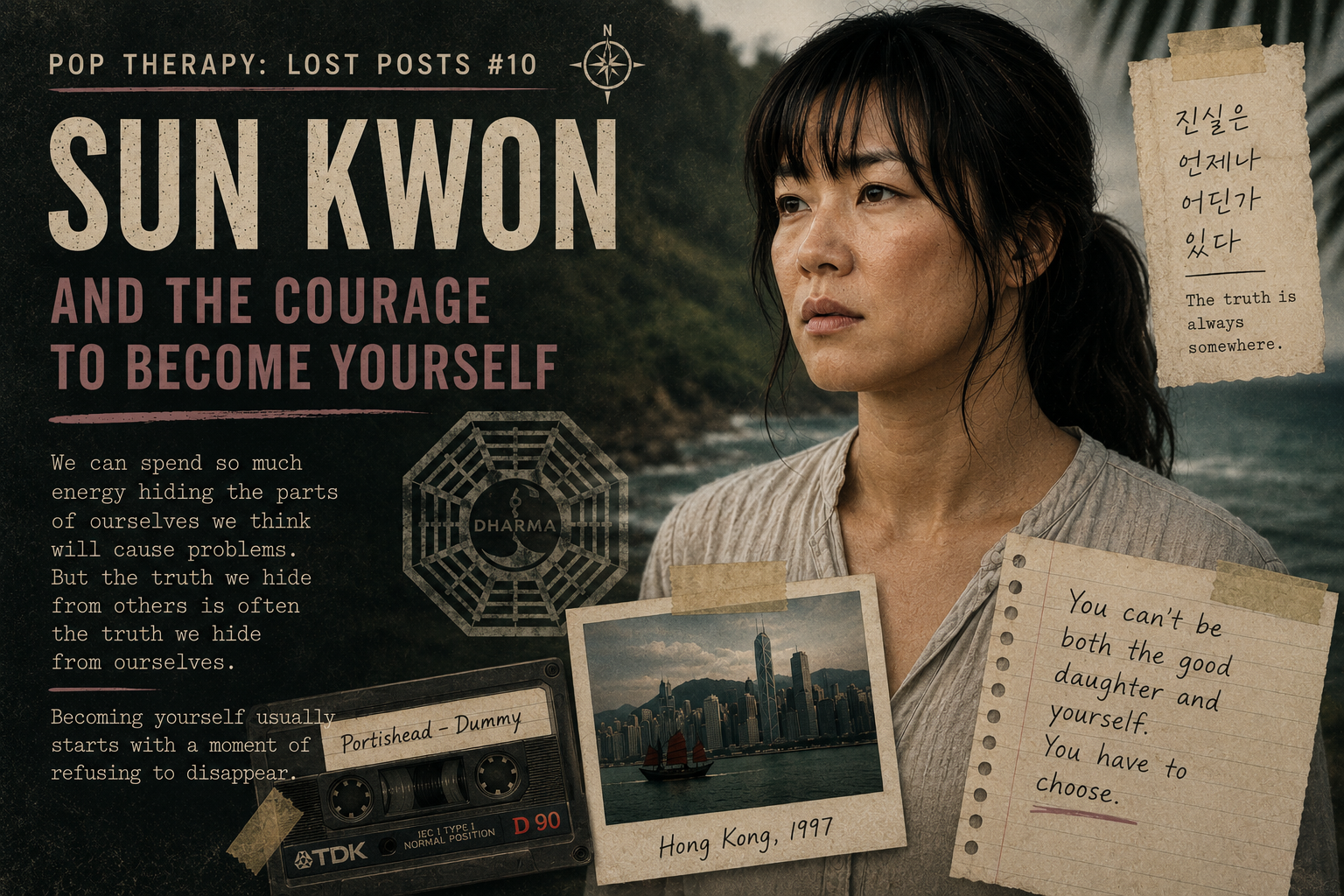
When people talk about Sun Kwon from Lost, they often focus on her transformation. They talk about confidence. Independence. Finding her voice. Those things are certainly part of her story. But I think there is something else happening underneath it all, something quieter and more familiar.
Sun spends much of her life becoming the person other people need her to be.
At first glance, this doesn't seem like a problem. Most of us do it. We learn what keeps the peace. We learn what earns approval. We learn which parts of ourselves fit comfortably into the family story and which parts are better left in the dark. The process is so gradual that it rarely feels like a choice. It feels like maturity. Responsibility. Love.
Then one day you wake up and realize you've become an expert in everyone else's expectations while remaining a stranger to yourself.
When we first meet Sun, she appears quiet and compliant. She translates. She observes. She smiles politely. Around her husband, Jin, she often seems smaller than she really is. It's easy to mistake this for weakness. But weakness isn't the right word. What we're seeing is adaptation.
People who grow up in demanding families often become remarkably skilled adapters. They develop an almost supernatural ability to read the room. They know when to speak. They know when to stay quiet. They know what version of themselves will create the fewest problems.
The trouble is that adaptation works.
At least for a while.
It protects relationships. It prevents conflict. It keeps the family system functioning. It can even earn admiration. The person becomes known as dependable, selfless, easygoing, mature. Everyone benefits from the arrangement except the person living it.
Therapy clients often arrive carrying this exact dilemma.
They don't usually say, "I've lost myself."
Instead, they say things like:
"I don't know what I want."
"I should be happy."
"Nothing is wrong, but something feels off."
They describe a vague loneliness that follows them around even when they're surrounded by people who care about them. Somewhere along the way, they became so focused on maintaining connection that they lost contact with themselves.
Sun understands this kind of loneliness.
One of the most interesting things about her story is that she doesn't simply hide things from other people. She hides things from herself. Her desires. Her anger. Her ambitions. Her disappointment. She keeps them tucked away because acknowledging them would create consequences.
The hidden self is often born this way.
Not from deception, but from self-protection.
A child learns that honesty creates tension. Vulnerability creates risk. Certain feelings make other people uncomfortable. So those feelings are packed away like old boxes in an attic. Years later, the person has forgotten they put them there.
The island has a way of bringing those boxes back downstairs.
That's what makes Lost such an enduring therapy show. The island rarely creates problems. More often, it exposes them. It strips away distractions and asks a question most people spend years avoiding:
Who are you when the life you've built can no longer contain the truth?
For Sun, that truth arrives slowly. It isn't one dramatic moment. It's a series of moments. Small acts of honesty. Small refusals. Small acknowledgements that her inner life matters too.
Real change often looks like that.
Movies teach us to expect breakthroughs. Therapy is usually more interested in recoveries.
Recovering your preferences.
Recovering your voice.
Recovering your anger.
Recovering your capacity to disappoint people and survive.
The people-pleasers I work with are often surprised by how uncomfortable this feels. They imagine authenticity will feel liberating from the start. More often it feels terrifying. When you've spent years managing everyone else's emotional weather, choosing yourself can feel strangely selfish.
It isn't selfish.
It's simply unfamiliar.
The irony is that relationships often improve when people stop disappearing inside them. Partners become easier to know. Friendships become more honest. Conversations become less performative. The very thing people fear will destroy connection often creates a deeper version of it.
By the end of Lost, Sun is still compassionate. Still caring. Still devoted to the people she loves. She doesn't become someone else.
She becomes more fully herself.
That distinction matters.
Therapy isn't about creating a new person. It isn't about becoming fearless, perfectly confident, or endlessly self-assured. More often, it's about reclaiming pieces of yourself that were abandoned in the service of survival.
The hidden life you've been carrying all these years may not need to be reinvented.
It may only need to be remembered.
Somewhere in the mid-1990s, while somebody sat alone listening to Dummy by Portishead and staring out a rain-streaked apartment window, they were probably wrestling with the same question Sun eventually faces: What if the person everyone likes isn't quite the same person I am? It's an uncomfortable question. But sometimes it's also the beginning of a more honest life.