Ben Linus and the Need to Control Everything
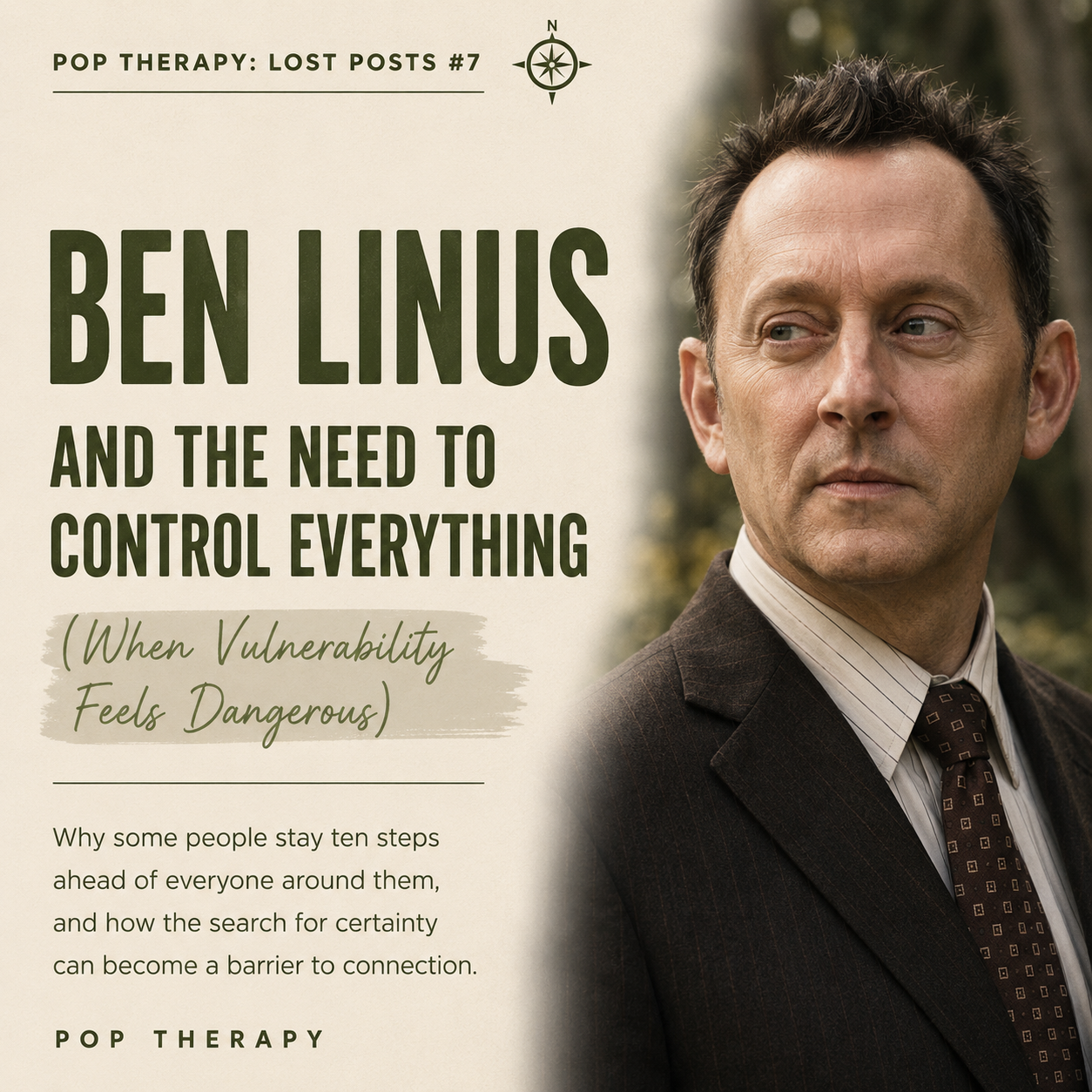
Ben Linus may be the most misunderstood character in Lost. He's manipulative. Deceptive. Secretive. He lies when the truth would be easier. He withholds information that could help people. He always seems to know more than everyone else, and he rarely gives up power willingly. That is his pattern.
It's easy to watch Ben and conclude that he simply likes being in control. I don't think that's quite right. I think Ben is terrified of what happens when he isn't. Underneath all the schemes and manipulation is a person who seems to have reached a painful conclusion very early in life: if you don't stay ahead of people, they will hurt you. If you don't manage the situation, someone else will. If you don't maintain control, you become vulnerable. And vulnerability feels dangerous.
Most people don't become controlling because life has always felt safe. They become controlling because, at some point, life didn't. Sometimes it happens in families where emotions are unpredictable. Sometimes it develops after betrayal, rejection, humiliation, or loss. Over time, control starts to feel less like a preference and more like protection. The problem is that control has a hidden cost.
It can help you manage uncertainty, but it often prevents genuine closeness. It's hard to be known when you're constantly managing what other people see. It's hard to trust when you're always preparing for the possibility that trust will be broken. It's hard to relax when every outcome feels like your responsibility.
Ben spends much of Lost trying to stay several moves ahead of everyone around him. He manipulates situations, anticipates threats, and carefully positions himself to maintain influence. From the outside, it can look like confidence. But confidence and control are not the same thing. Confident people can tolerate uncertainty. Controlling people often cannot. That's why control tends to expand. What starts as a way to stay safe eventually becomes a way of life. More information. More planning. More preparation. More management. More attempts to eliminate risk.
The irony is that the more we try to eliminate uncertainty, the more anxious we often become. Because uncertainty never disappears. There is always another outcome to manage. Another conversation to prepare for. Another threat to anticipate.
Many people eventually discover that their control strategies have become exhausting. They find themselves unable to enjoy good moments because they are already preparing for what could go wrong. They struggle to trust people who have given them no reason to distrust them. They remain vigilant long after the danger has passed.
In those moments, the question is no longer, "How do I stay in control?" The question becomes, "What would happen if I didn't have to?" That doesn't mean becoming passive. It doesn't mean abandoning boundaries or pretending everything will work out. It means recognizing that some forms of control are actually attempts to escape uncertainty. And uncertainty is part of being alive.
What makes Ben such a fascinating character is that beneath all his efforts to manage people and situations, there is a lonely human being trying desperately to protect himself from disappointment, rejection, and loss. Many of us do the same thing in less dramatic ways. We manage. We anticipate. We prepare. We rehearse. We stay one step ahead. Until one day we realize that the strategies designed to protect us are also keeping us from experiencing the very things we want most.
Connection.
Trust.
Peace.
Love.
Pop Therapy Takeaway
Control often begins as protection.
The problem is that what protects us from uncertainty can also prevent us from fully participating in life.
Sometimes growth begins when we stop asking, "How do I control the outcome?"
And start asking, "How do I stay present when I can't?"