Daniel Faraday and the Problem of Thinking Your Way Out of Life
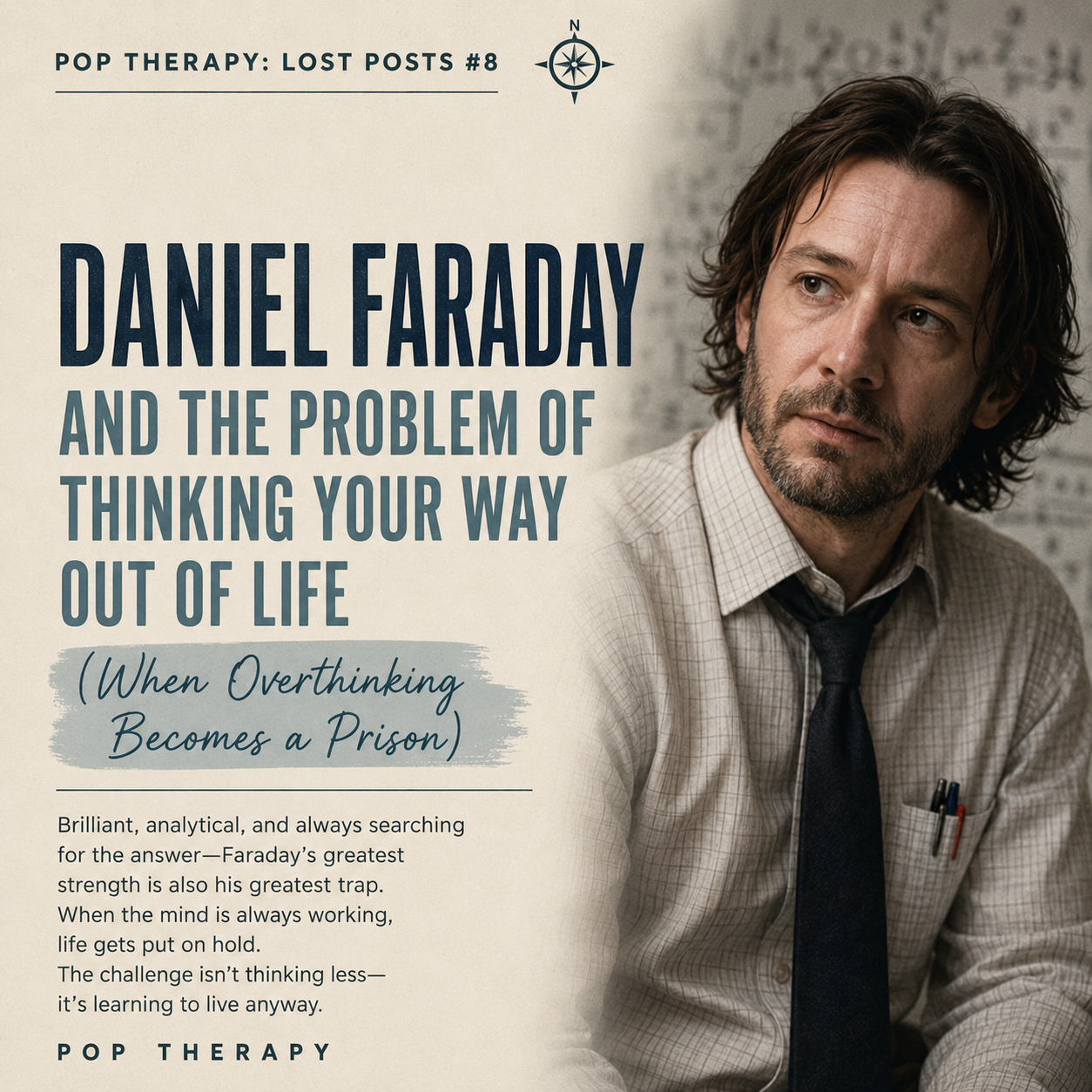
One of the reasons Daniel Faraday stands out to me among the characters on Lost is that he doesn't arrive on the Island carrying a weapon or a grand destiny. He arrives carrying notebooks. While everyone else is reacting to the latest crisis, Faraday is usually hunched over a page somewhere, trying to understand what is happening. There is something comforting about that image. If the world becomes confusing enough, maybe the answer is to study it. Maybe if you can gather enough information, connect enough dots, and build a model that explains everything, the confusion will finally settle down into something manageable.
The trouble is that life doesn't always cooperate with that arrangement. There are experiences that refuse to become theories or patterns. Grief is like that. Love is like that. Loneliness is like that. You can spend years developing an incredibly sophisticated understanding of why you feel the way you do, and still find yourself staring at the same decisions, the same fears, and the same unanswered questions. Knowing and living are related to each other, but they are not the same thing. Sometimes they are not even close.
I've noticed that some of the most thoughtful people I meet are also the people who feel the most stuck. They are rarely impulsive. They are rarely reckless. In fact, they have usually considered every possible outcome before taking a step. By the time they sit down in my office, they can explain their history, their family dynamics, and their emotional patterns with remarkable clarity. They know what happened. They know why it happened. They know what they probably ought to do next. What they can't quite figure out is why all of that knowledge hasn't translated into movement.
Part of what makes that so difficult is that thinking feels productive. It feels responsible. If someone spends an entire Saturday drinking, they usually know they avoided something. If someone spends an entire Saturday scrolling their phone, they usually know they avoided something. If someone spends an entire Saturday reading articles, making plans, researching options, comparing possibilities, and trying to determine the perfect course of action, that can feel very different. It can feel like progress. Sometimes it is progress. Other times it is simply a more socially acceptable way of postponing the risk that comes with participation.
Faraday fascinates me because his intelligence is both a gift and a refuge. Again and again, he finds himself confronted by situations that cannot be solved through understanding alone. The Island keeps demanding something more from him. It demands contact with uncertainty. It demands action before certainty arrives. It demands that he step into experiences that cannot be fully explained ahead of time. The equations matter, but eventually the equation runs out and life is still standing there waiting.
I think that is the place where many people get stranded. They imagine that confidence will arrive first and action will follow. They imagine there will be a moment when the fog clears, every variable is accounted for, and the correct choice becomes obvious. Yet most of the meaningful things we do happen under much messier conditions than that. Relationships begin before we know how they will end. Creative projects begin before we know whether they will work. Difficult conversations begin before we know how the other person will respond. We move, not because certainty finally arrived, but because we became willing to proceed without it.
Watching Faraday now, years after first seeing the show, I find myself less interested in the science fiction aspects of his character and more interested in what he represents. He reminds me of the part of all of us that wants one more answer before taking the next step. One more book. One more insight. One more piece of information. Meanwhile life keeps waiting patiently off to the side, asking a much simpler question: Are you ready to participate yet?
Maybe that's why his story lingers with me. Not because he studies time, but because he seems trapped by the same temptation that catches so many of us. The temptation to believe that if we can understand life well enough, we won't have to risk living it. The Island never lets him get away with that for very long, and in a strange way, neither does life.