Why Gen Z Might Need Lost More Than We Did
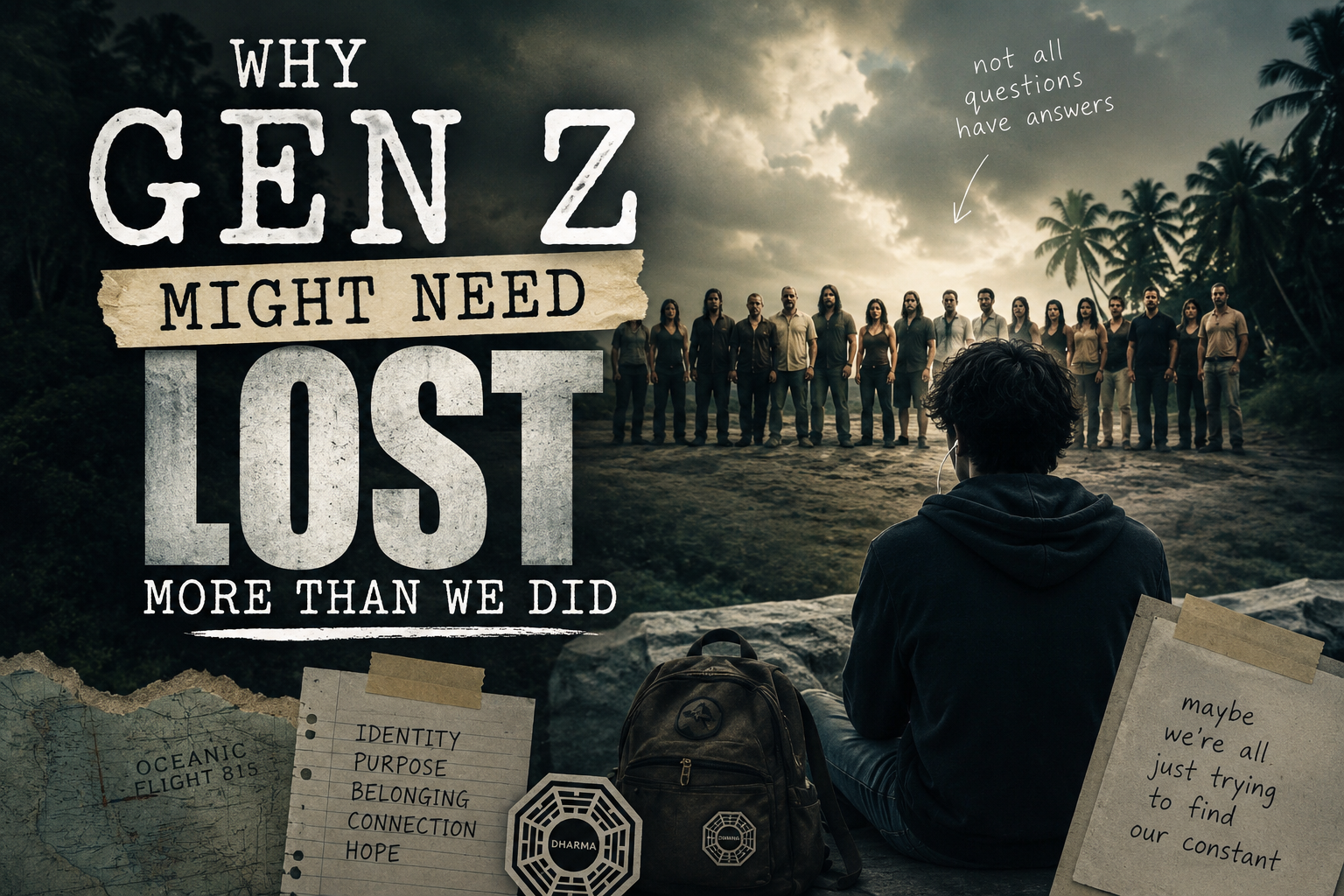
The strange thing about Lost turning twenty is that the people discovering it now weren’t even alive when Oceanic 815 crashed.
Some of them were toddlers when the finale aired. Some were born after Jack closed his eye in the bamboo forest. They did not wait a week to find out what was in the hatch. They never argued on message boards. They don’t remember coworkers discussing the previous night’s episode in the break room. They didn’t experience that particular early-2000s feeling of collectively asking, “What the hell is going on?”
And yet they keep finding the show.
Part of this is simply streaming. Everything eventually becomes available to everybody. But that explanation feels too easy. Plenty of old television sits quietly on servers waiting to be rediscovered. Most of it stays there.
Lost keeps finding new people.
When the show originally aired, many of us were roughly the same age as Kate, Sawyer, Charlie, and Sayid. We were beginning careers, starting families, wondering whether we’d chosen correctly, and quietly carrying the suspicion that adulthood might not feel as solid as we’d been promised. The island became a place where those questions could be asked out loud.
But younger viewers are arriving at the show from a completely different country.
They grew up online.
Many have never known a world without social media, algorithmic recommendations, endless comparison, or the sense that their identities are being assembled publicly in real time. Their photographs are archived. Their opinions are searchable. Their mistakes are documented. The pressure to know who you are seems to begin earlier and earlier, often before anyone has had a chance to become anybody.
Then they watch a television show in which a group of strangers literally lose everything.
No phones. No feeds. No followers. No carefully maintained versions of themselves. The lawyer is just a frightened man. The con artist becomes a caretaker. The addict is forced to confront his addiction without distraction. The successful surgeon discovers that competence does not protect him from fear.
The island strips everyone down to the questions underneath the biography.
Who are you when your old story stops working?
That question may feel more relevant now than it did twenty years ago.
The characters on Lost spend very little time trying to optimize themselves. They are not building personal brands. Nobody talks about productivity hacks. Nobody is curating their life. They are trying to forgive themselves, reconnect with people, survive grief, and decide whether change is possible.
That kind of sincerity can feel almost shocking now.
Modern culture often teaches us to stand outside our own experiences. Everything becomes content, commentary, reaction, or irony. We learn to joke about our pain before we feel it. We anticipate criticism before anyone criticizes us. Somewhere along the way, earnestness became embarrassing.
Lost never received that memo.
John Locke genuinely believes people can change. Jack honestly wants to fix things. Hurley wants people to be okay. Desmond spends years trying to save one person because he loves her. Even Ben Linus, the island’s most complicated manipulator, wants to matter to someone.
The show risks looking foolish in the pursuit of meaning.
Perhaps that is exactly why younger viewers connect with it.
For Gen X viewers, Lost may function partly as nostalgia. We remember where we were when it aired. We remember the music, the commercials, the old televisions, the strange pleasure of waiting.
For Gen Z viewers, the show feels almost archaeological. People sit together without looking at phones. They argue face to face. They wait. They get bored. They stare into the distance. Entire scenes unfold without anyone documenting them.
The island itself begins to feel less like science fiction and more like a place where attention still exists.
This does not mean younger people are somehow longing to become older generations. Every generation imagines the previous one had something easier. That is probably never true.
But every generation inherits different problems.
If Millennials inherited uncertainty, perhaps Gen Z inherited infinite possibility. If we feared being stuck, they often fear choosing incorrectly. If we worried about not being enough, they worry about becoming the wrong version of themselves before they have even begun.
Lost offers a different possibility.
You are allowed to begin again.
You are allowed to become someone else.
Your worst day does not have to become your identity.
And perhaps the most radical idea the show still offers is this: other people matter.
Jack needs Hurley. Sawyer needs Juliet. Charlie needs Claire. Locke needs someone to believe him. None of them heal alone. None of them figure themselves out in isolation.
The island is frightening, confusing, and often unfair, but it insists upon one thing.
We survive by becoming known.
Maybe that is why people born after the show ended continue to discover it.
Not because they need answers.
Because they are still asking the same questions.
And somewhere, on an island that exists outside of time, a group of damaged people continue building shelters, making campfires, and reminding one another that nobody was ever supposed to do this alone.
As Michael Stipe sang sometime around the first Clinton administration, “Find the river.” Sometimes it takes a plane crash to realize you were looking for it all along.